
Operations · Guide
The picture is beautiful. Is that the product you sell?
Use a hypothetical mug review board to distinguish creative scenes from product facts and retain image provenance metadata.
The picture is beautiful. Is that the product you sell?
Original AAHouse explanatory video. AI-assisted conceptual visuals and neural narration; original music.
English transcript · Simplified Chinese Mandarin transcript · Taiwan Mandarin transcript · Macao Cantonese transcript
The picture is beautiful. Is that the product you sell?
Imagine a small US retailer using AI to place a blue mug in a sunset scene. The lighting is lovely, but the rim becomes narrower and a lid appears. Creative images can inspire a shoot without proving what the product looks like. Our fictional mug review board separates scene ideas from product facts. All illustrations are concepts, not photographs of an actual item for sale.
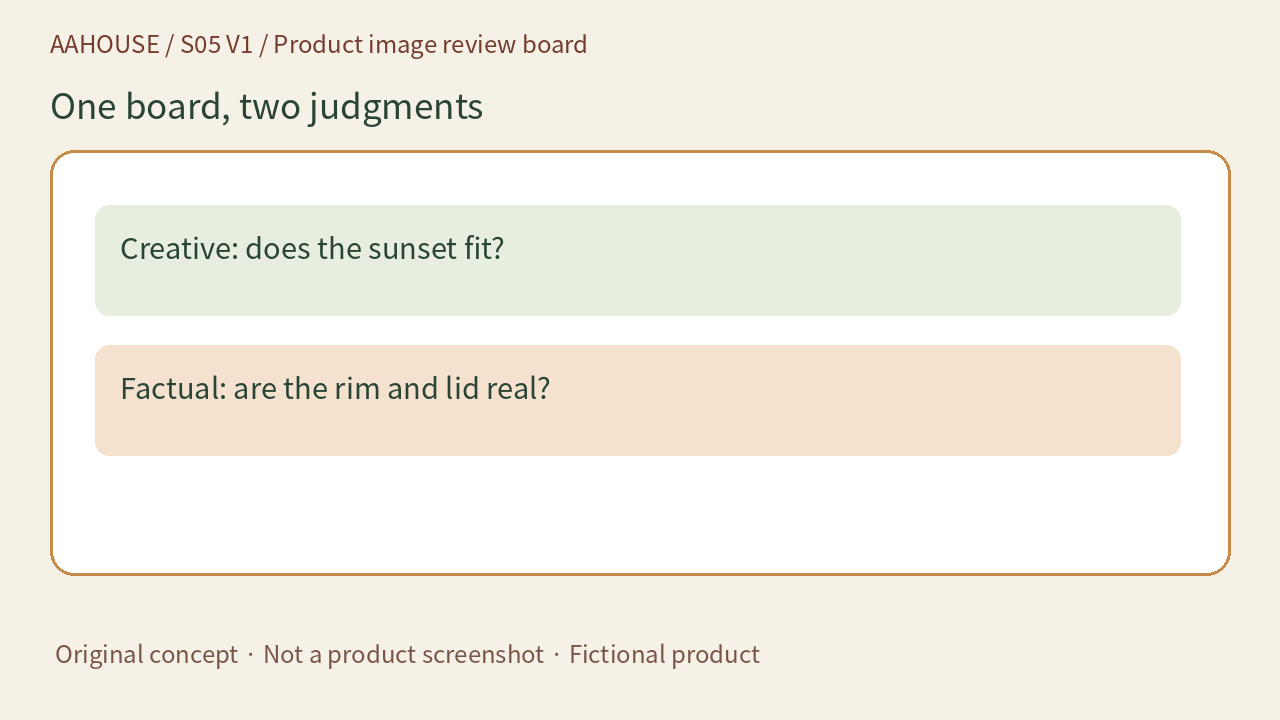
- Creative: does the sunset fit?
- Factual: are the rim and lid real?
Unchanged original source explanatory diagram.
First frame: imagine the setting, preserve the mug
We suggest starting from actual product photographs and specifications before exploring backgrounds or lighting. Compare the original and result side by side. Do the handle, rim, color, and accessories still match? Google Merchant Center requires the main image to represent the item sold and its variant accurately.[1] Visual appeal cannot replace a correct match. Inventing a lid can mislead buyers about what arrives.
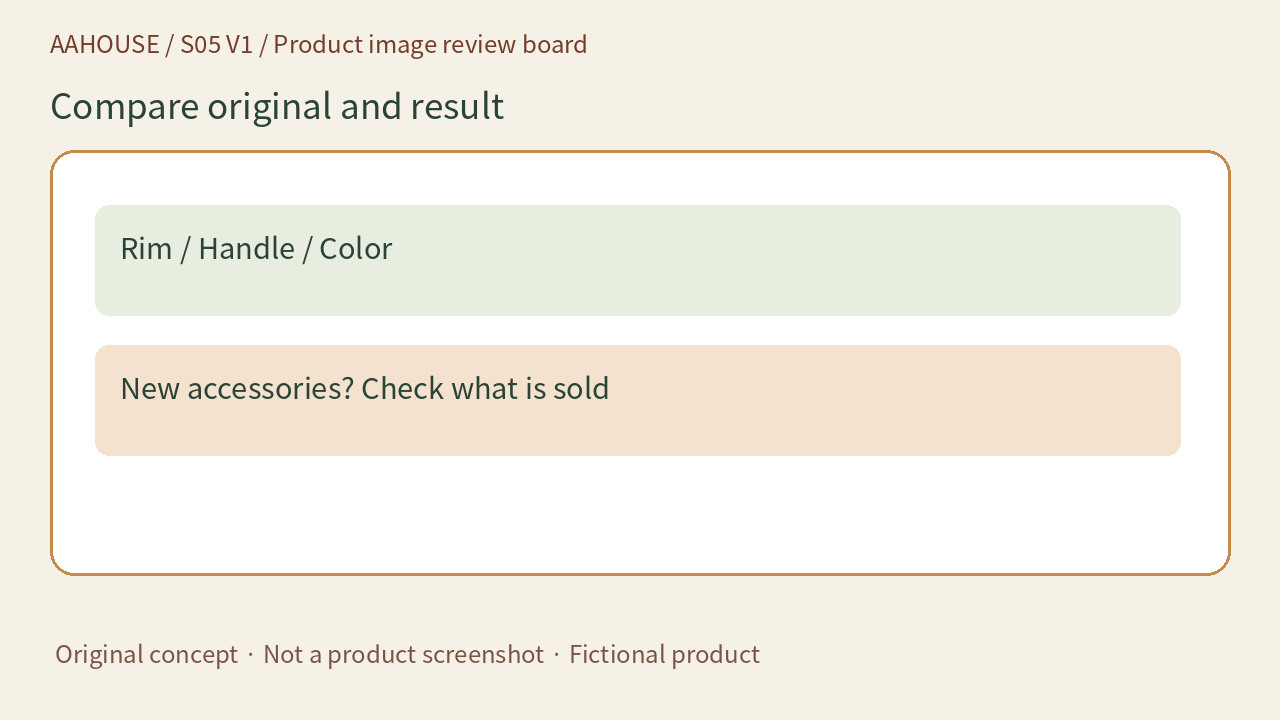
- Rim / Handle / Color
- New accessories? Check what is sold
Unchanged original source explanatory diagram.
Second frame: a creative proposal, not yet a main image
Exaggerated settings can be useful in an internal creative discussion. Label the image as a concept sketch, settle the intended mood, then verify product details. We suggest separating reviewed candidates from exploratory drafts so colleagues do not accidentally use a brainstorm image as a product image. This division does not promise better conversion or establish compliance across platforms. Check the rules for the actual placement.
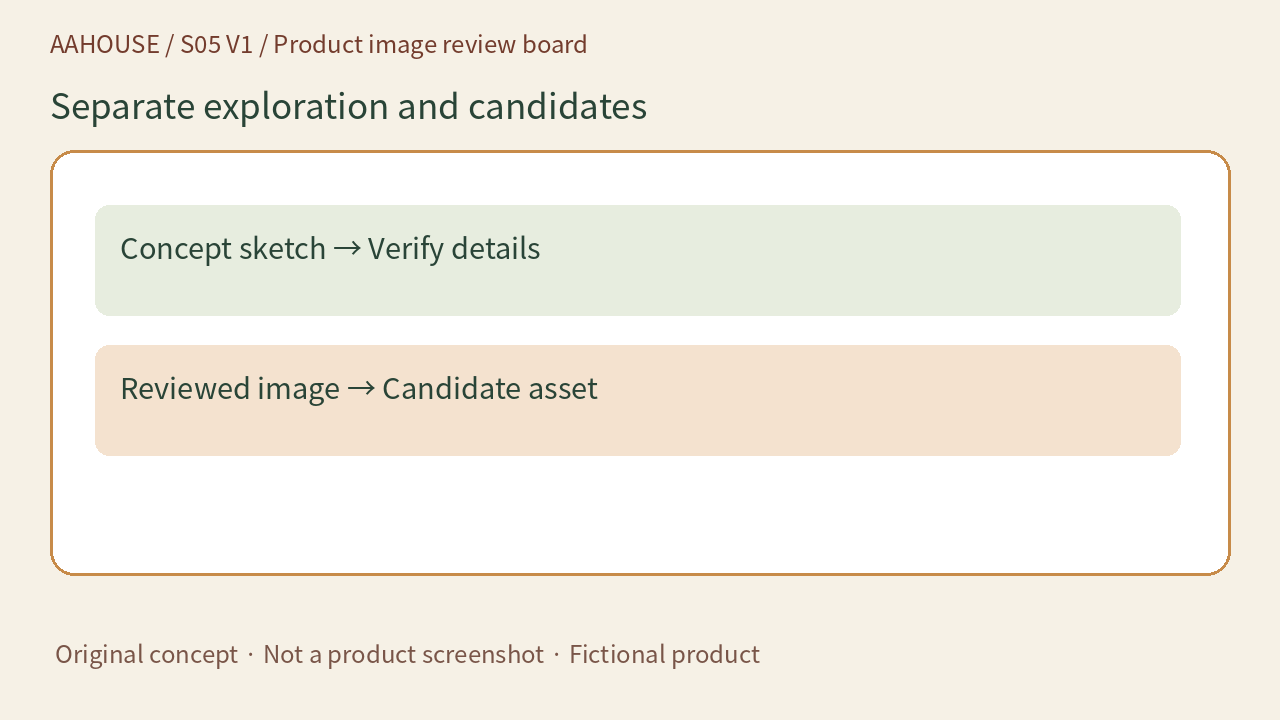
- Concept sketch → Verify details
- Reviewed image → Candidate asset
Unchanged original source explanatory diagram.
Third frame: do not optimize away the provenance
Google requires appropriate provenance metadata for generative AI images.[2] In 2024, IPTC also reminded merchants not to strip such information during image processing.[3] We therefore suggest taking one test image through compression, cropping, and export, then inspecting the provenance fields in the final file. Missing metadata is invisible to the eye. Adding a written disclosure does not replace metadata required by the platform.
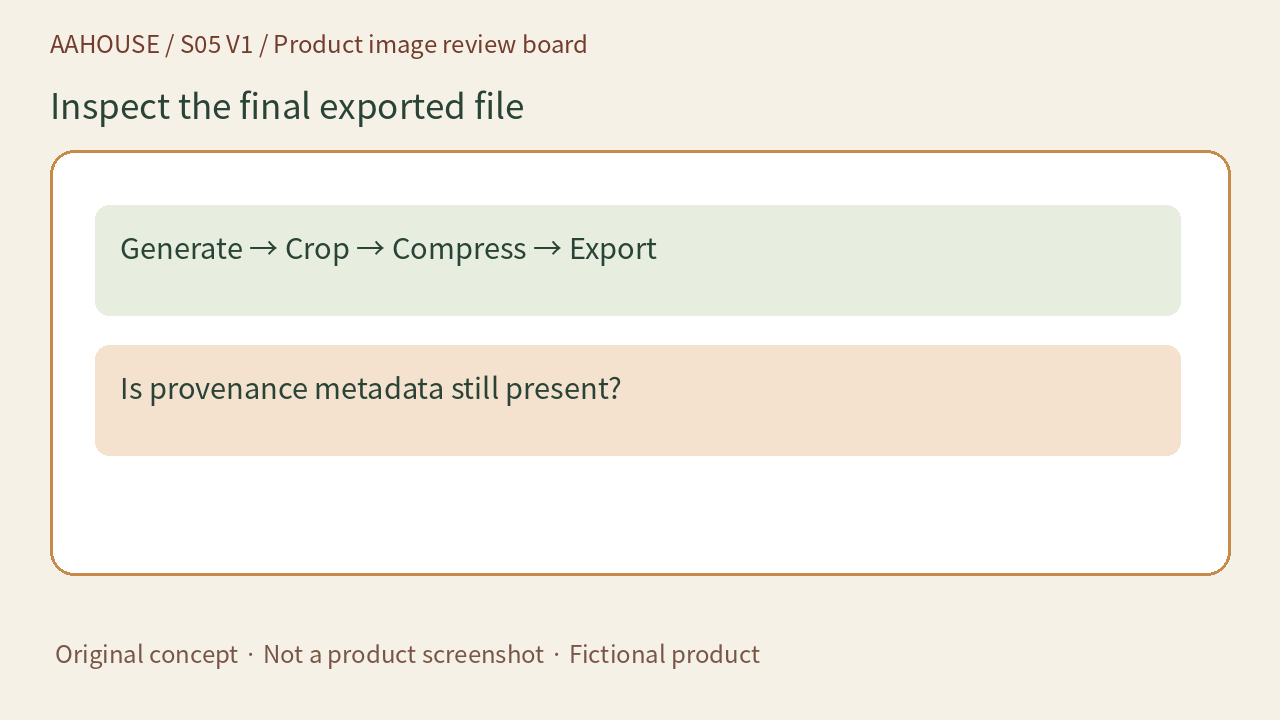
- Generate → Crop → Compress → Export
- Is provenance metadata still present?
Unchanged original source explanatory diagram.
The final choice: a faithful product with traceable origins
At the end of the review, do not simply choose the most striking frame. Have the product owner check its match to the item and the producer check provenance in the final file. State whether it remains an internal concept or is a candidate for use. If product details cannot be preserved reliably, return to photography or remake the asset. AI can accelerate scene exploration without making every generated picture ready to sell.
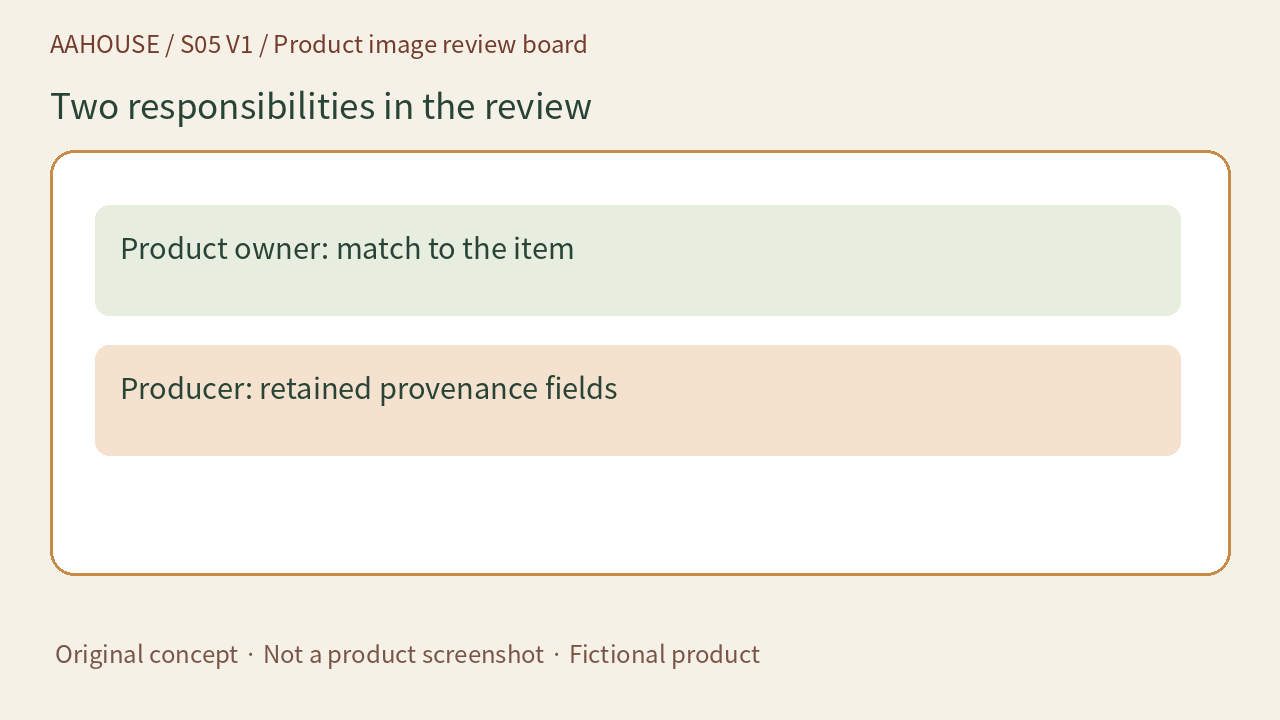
- Product owner: match to the item
- Producer: retained provenance fields
Unchanged original source explanatory diagram.