
Operations · Guide
The quest for “cheap and easy” AI
Compare ready-made features, visual workflows and custom systems by usability, consumption and long-term maintenance responsibilities.
The quest for “cheap and easy” AI
Original AAHouse explanatory video. AI-assisted conceptual visuals and neural narration; original music.
English transcript · Simplified Chinese Mandarin transcript · Taiwan Mandarin transcript · Macao Cantonese transcript
The quest for “cheap and easy” AI
Cheap and easy are worthwhile goals. Before buying, separate three meanings of easy: easy to start, easy to use, and easy to maintain. A demo often answers only part of that question. This article compares built-in features, visual workflows, and custom solutions by asking who carries the complexity. Low price does not imply poor quality, and custom development is not a requirement.
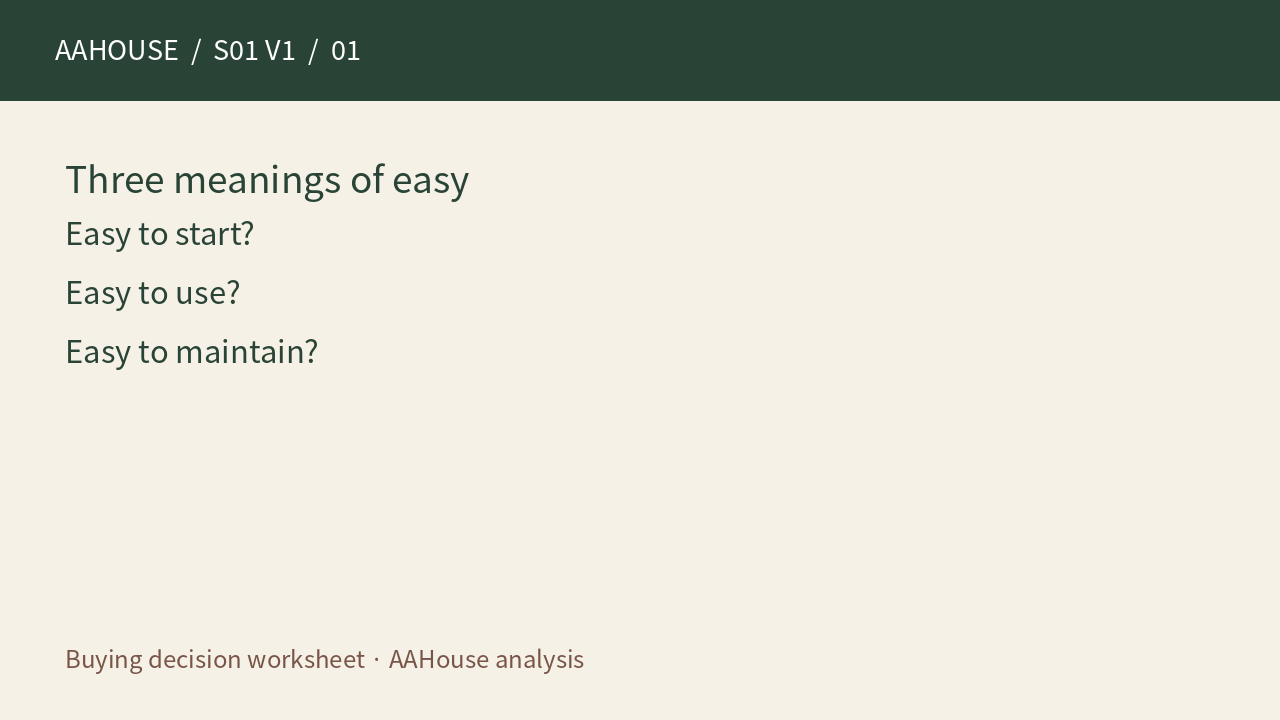
- Easy to start?
- Easy to use?
- Easy to maintain?
Unchanged original source explanatory diagram.
Sometimes doing less is the better design
Turning verified product facts into a draft for review may not need an agent that acts across several systems. Anthropic’s December 2024 design article recommends starting simply and adding complexity when needed.[1] That is an architectural principle, not a product ranking. The page also warns that its tooling landscape has changed. A narrow feature set can be a deliberate strength.
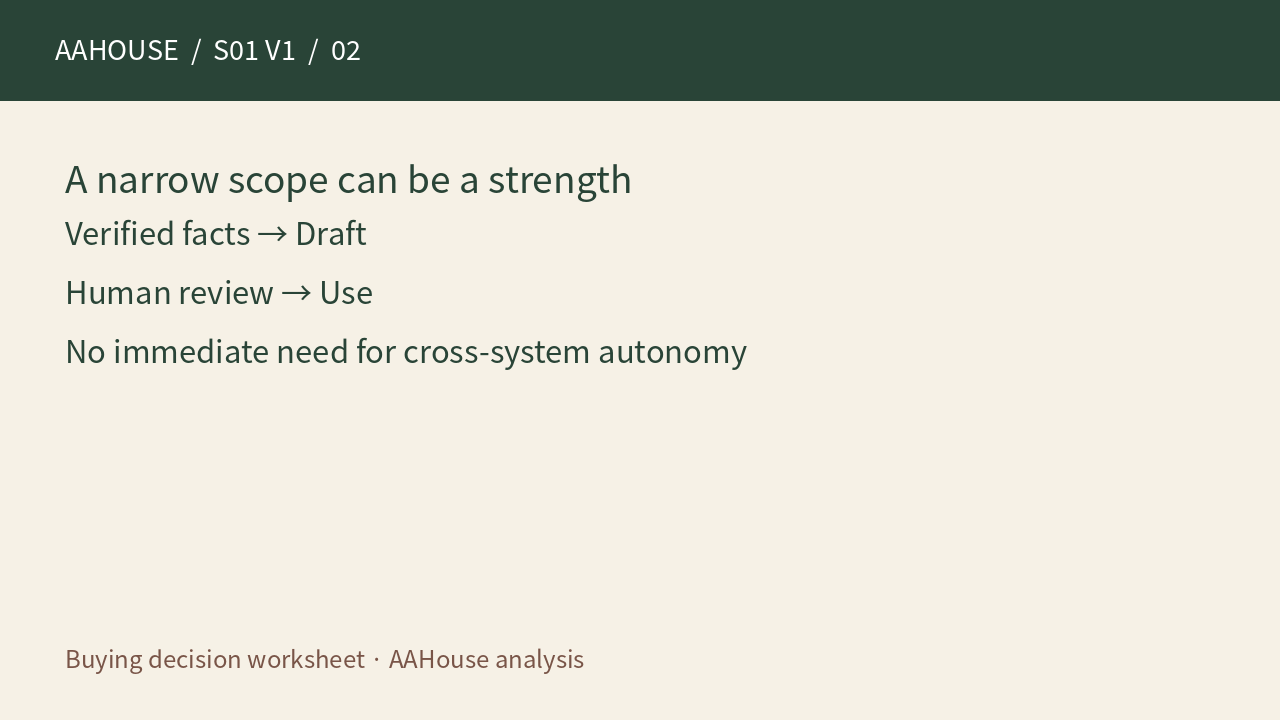
- Verified facts → Draft
- Human review → Use
- No immediate need for cross-system autonomy
Unchanged original source explanatory diagram.
Buy a feature, assemble a workflow, or build?
Our selection order is to check existing software first, consider a visual workflow for fixed steps, and evaluate custom work only for a concrete, important gap. A packaged product transfers some maintenance to a supplier but requires accepting its boundaries. Custom work can fit the process more closely while leaving maintenance responsibilities. Do not acquire an entire platform just to obtain one useful button.
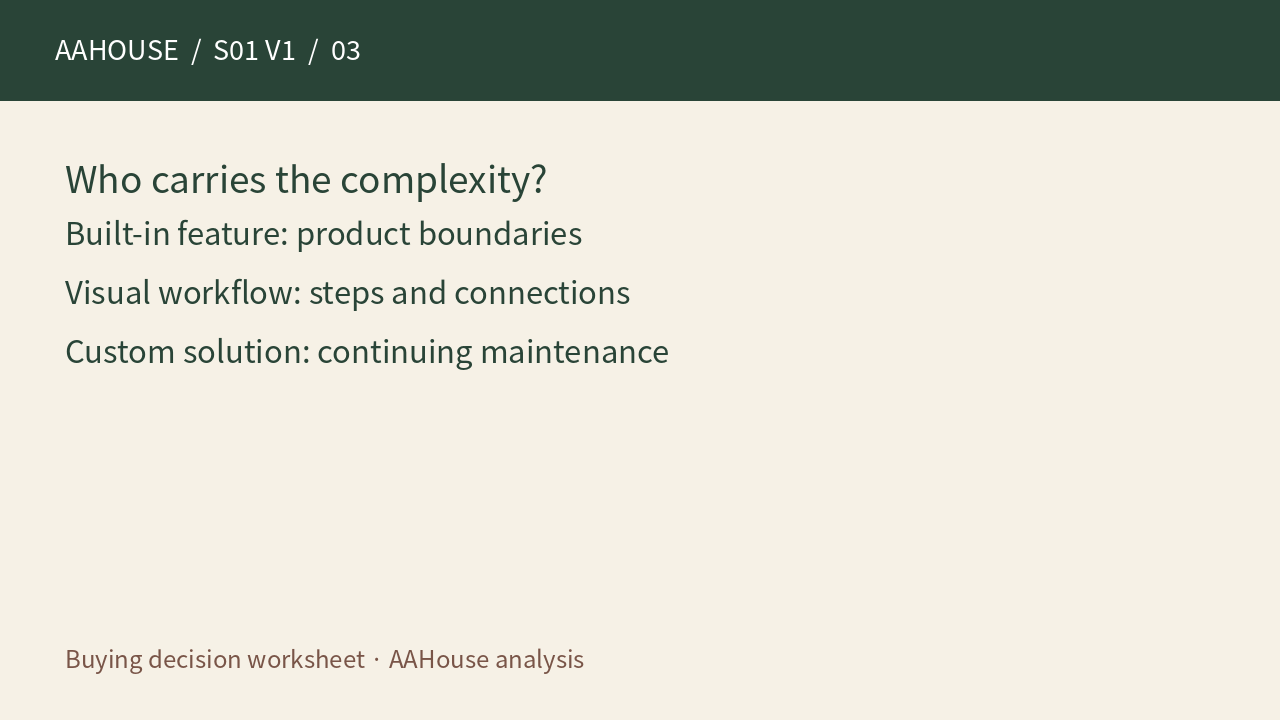
- Built-in feature: product boundaries
- Visual workflow: steps and connections
- Custom solution: continuing maintenance
Unchanged original source explanatory diagram.
An easy interface does not guarantee easy billing
A graphical interface can help a team understand a workflow, but underlying usage still needs explanation. Microsoft currently describes Copilot Credits that vary with agent type, knowledge sources, and response or action complexity.[2] This is not every tool’s billing model. During a pilot, record usage for typical tasks, human checking, and rework. Check whether fewer clicks simply became more work for someone else.
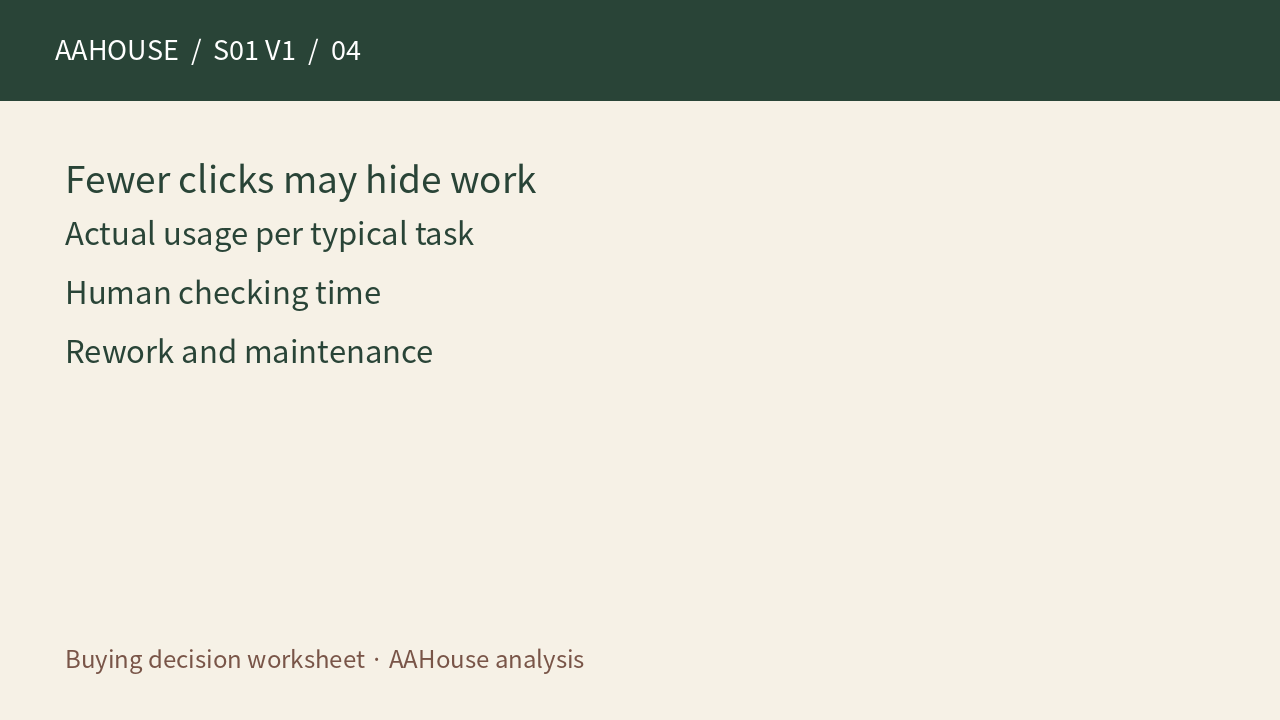
- Actual usage per typical task
- Human checking time
- Rework and maintenance
Unchanged original source explanatory diagram.
Try two requirement cards for a print shop
Imagine a U.S. print shop. Card A requests flyer drafts that a designer reviews before use. Card B requests delivery commitments that require current capacity and orders. Try an existing writing feature for A. For B, first establish reliable records and an accountable person, then decide whether to integrate automation. This is hypothetical analysis. Similar chat interfaces do not require one product or the same autonomy.
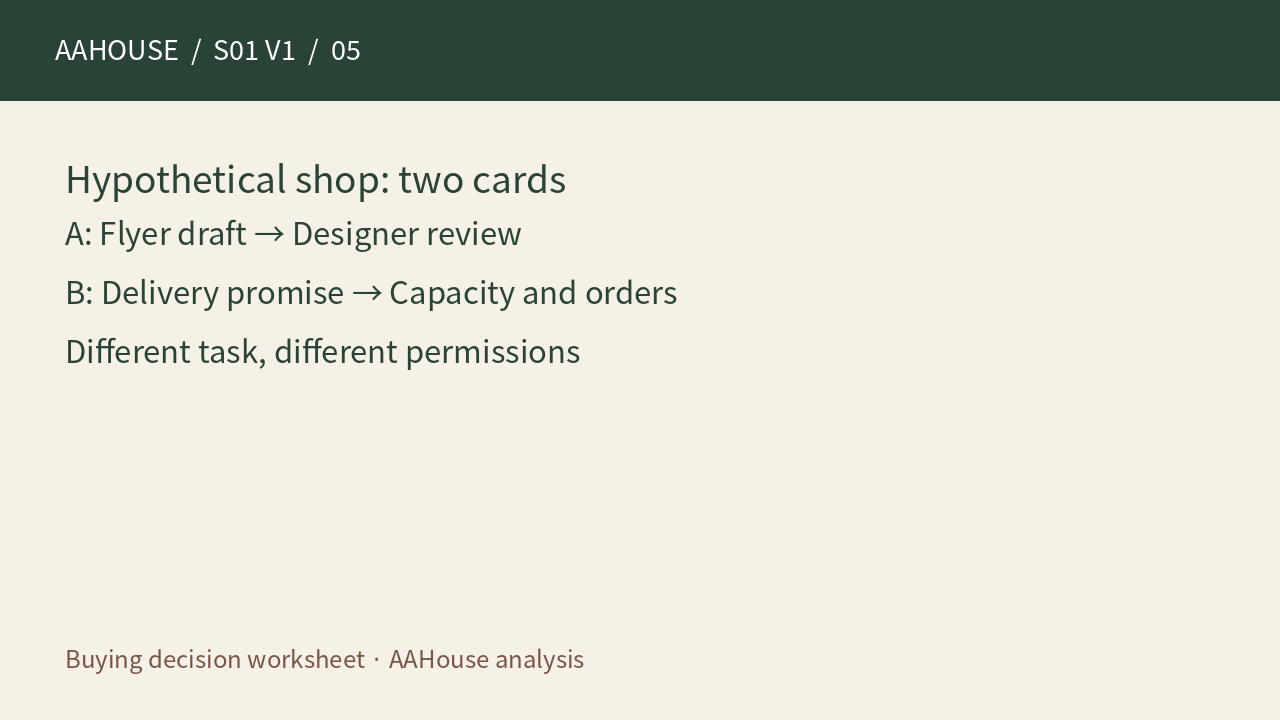
- A: Flyer draft → Designer review
- B: Delivery promise → Capacity and orders
- Different task, different permissions
Unchanged original source explanatory diagram.
Make ease of use survive a handoff
Our proposed acceptance exercise lets actual users try a normal task, stale information, an unanswerable question, and a human handoff. Then ask another colleague to take over maintenance. NIST’s relevant framework companion places trustworthiness within AI use and evaluation.[3] We recommend making ownership, review time, data permissions, and exit arrangements explicit. Easy should include finding help when something fails, not merely getting the first success.
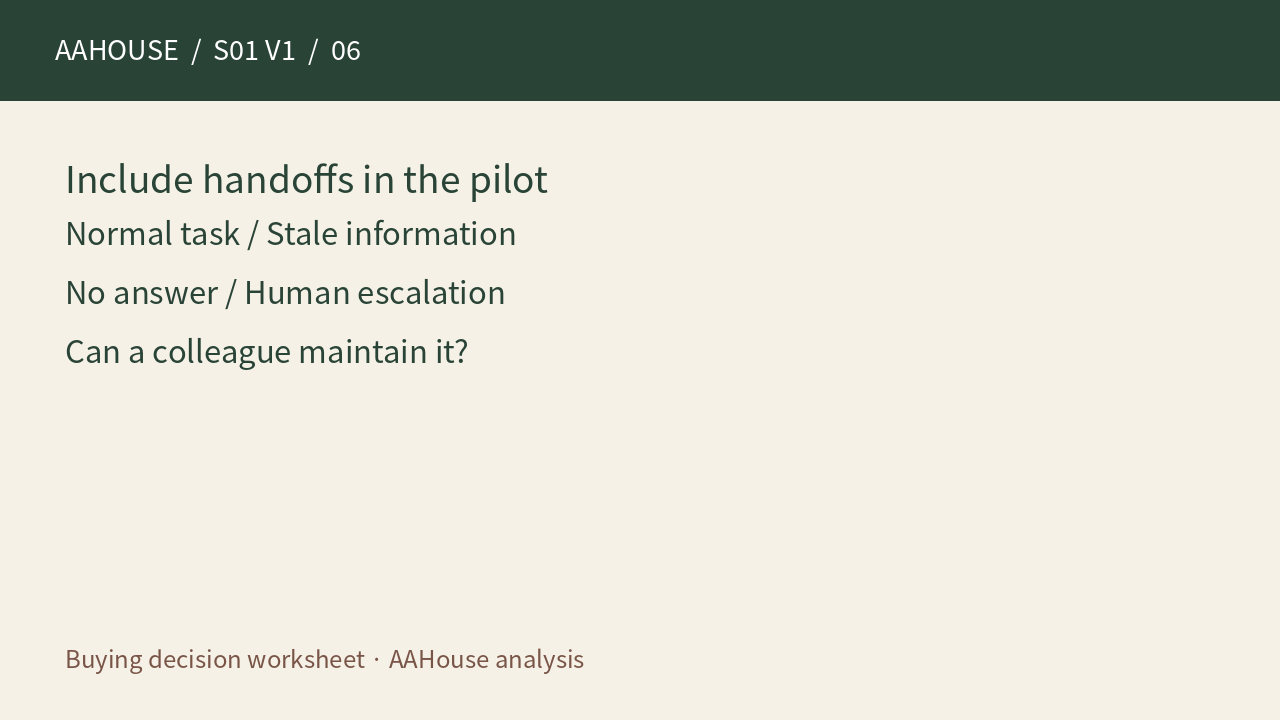
- Normal task / Stale information
- No answer / Human escalation
- Can a colleague maintain it?
Unchanged original source explanatory diagram.
Did complexity disappear, or move?
List the work carried by the supplier, employees, and maintainer separately. If an existing feature meets the quality threshold, a more elaborate agent may be unnecessary. If a limitation blocks important work, use a pilot to demonstrate that added complexity is worthwhile. Expansion, a narrower scope, and stopping are all legitimate outcomes. Cheap and easy should mean a system the team can sustain, understand, and hand over.
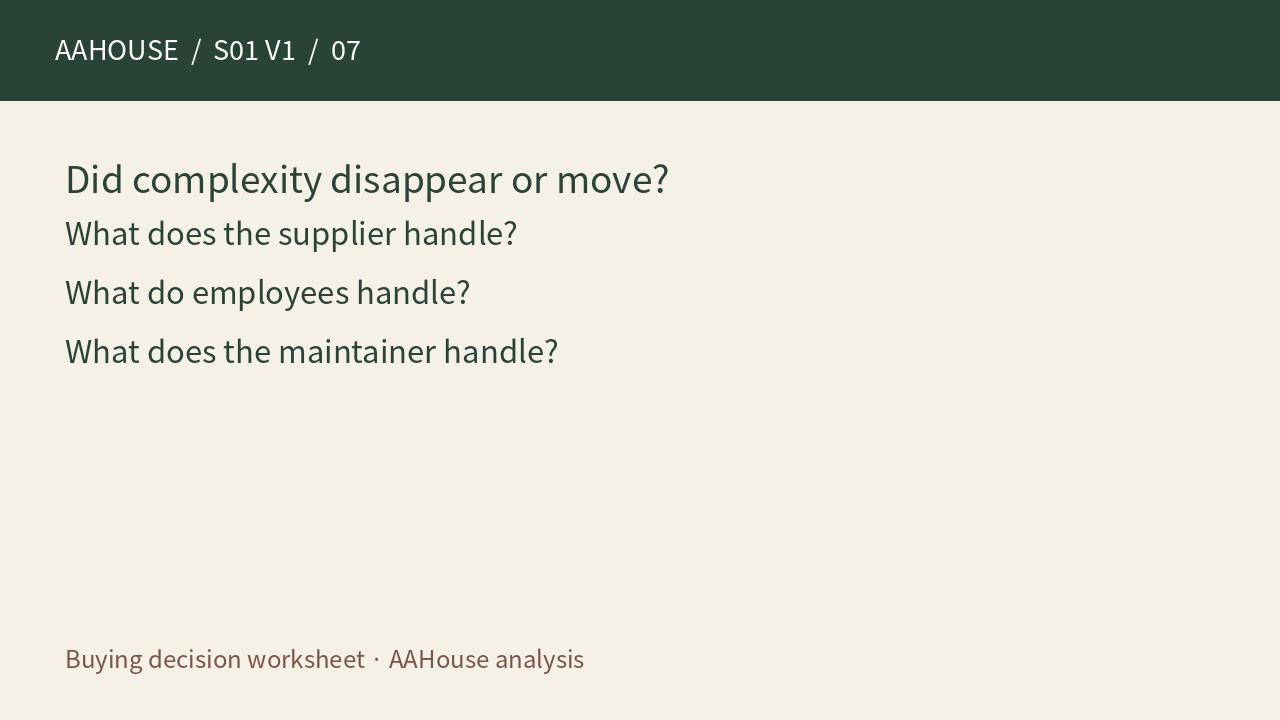
- What does the supplier handle?
- What do employees handle?
- What does the maintainer handle?
Unchanged original source explanatory diagram.