
Operations · Guide
The PDF looks right. Which sentence does AI read next?
Compare PDF pages with extracted text to verify columns, tags and the reading order of course prerequisites.
The PDF looks right. Which sentence does AI read next?
Original AAHouse explanatory video. AI-assisted conceptual visuals and neural narration; original music.
English transcript · Simplified Chinese Mandarin transcript · Taiwan Mandarin transcript · Macao Cantonese transcript
Look at the page, then read the stream
Imagine a U.S. training company asking AI to draft support replies from a two-column course brochure. The left column describes an introductory course; the right describes an advanced course. Every word survives extraction, but the advanced prerequisites end up after the introductory description. This fictional editing scenario exposes a gap: a correct-looking page can still produce the wrong sentence sequence.
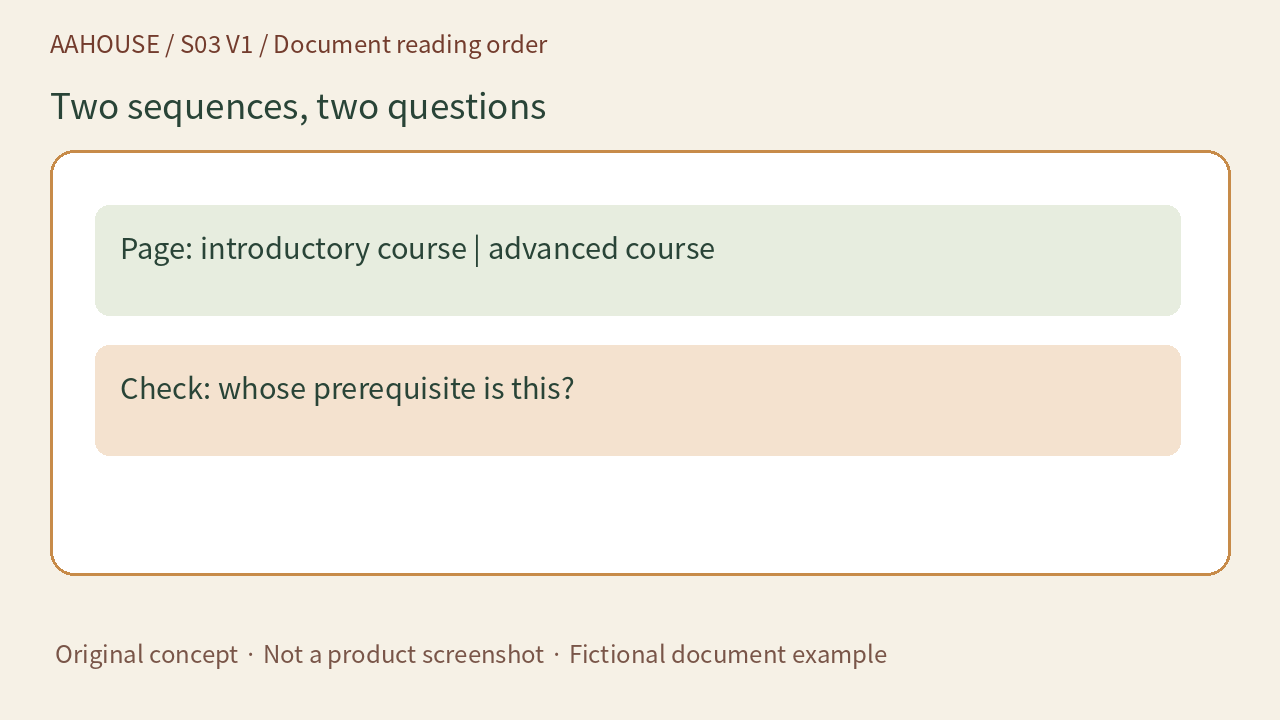
- Page: introductory course | advanced course
- Check: whose prerequisite is this?
Unchanged original source explanatory diagram.
Draw the path before judging the answer
Mark the intended path through the heading, left column, right column and footnote on the original page. Compare it with the actual text sent to the model. Do more than count missing words: identify which course each condition modifies. Circling the broken transition makes the problem easier to locate than asking AI to read carefully. This is a proposed acceptance method, not a completed client test.
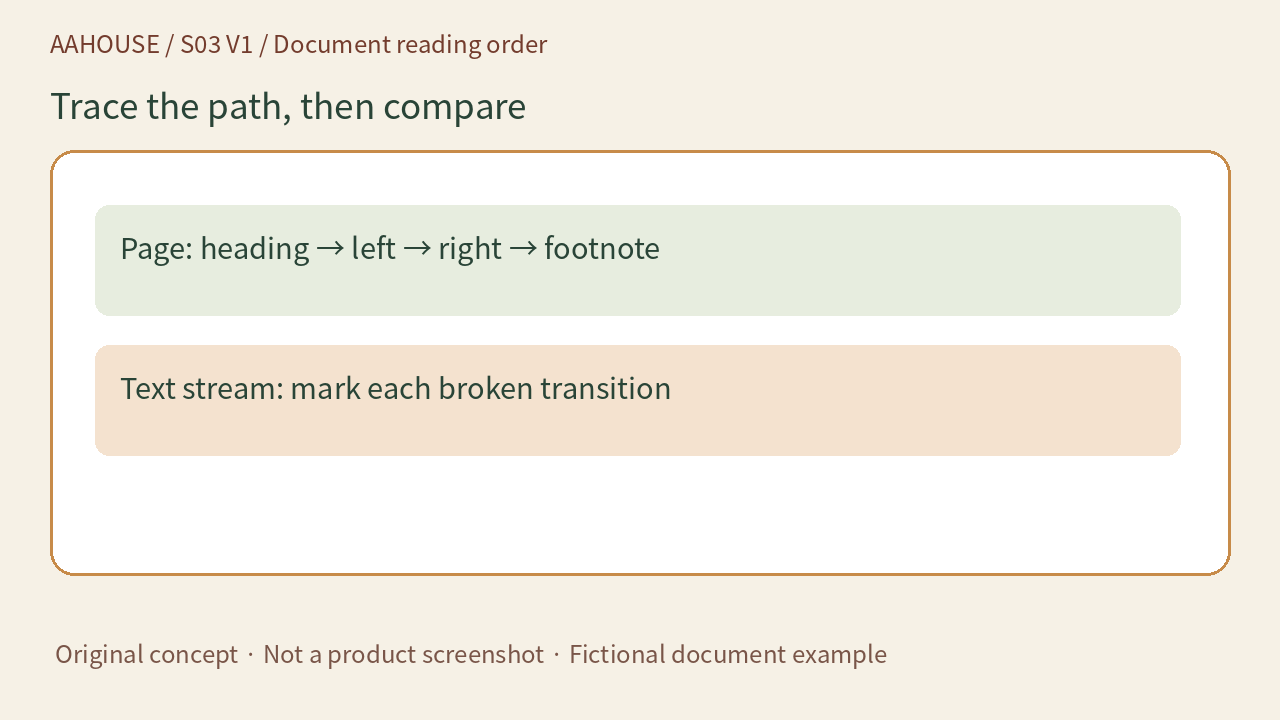
- Page: heading → left → right → footnote
- Text stream: mark each broken transition
Unchanged original source explanatory diagram.
Tags are a starting point
W3C technique PDF3 explains that element tag order primarily determines reading order in tagged PDFs, while complex layouts may still need correction after conversion.[1] This is accessibility guidance, not an accuracy guarantee for an AI product. A tagged-file label does not replace checking the sequence itself.
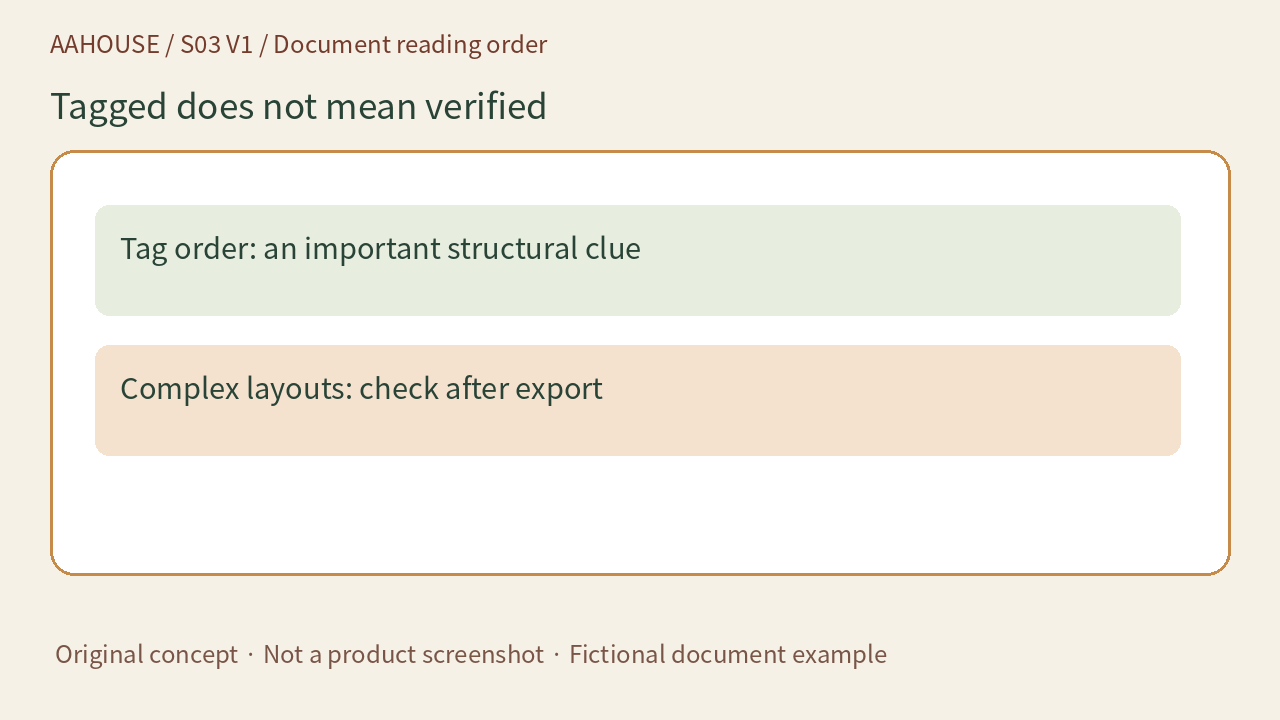
- Tag order: an important structural clue
- Complex layouts: check after export
Unchanged original source explanatory diagram.
A sorting option is not understanding
PyMuPDF documentation warns that ordinary extracted text may not follow usual reading order and describes options such as text blocks with position information.[2] Business acceptance should also cover column transitions, sidebars and exceptions. A sorting option that improves one page does not prove that it understands every layout. Sample the actual extraction path your workflow uses.
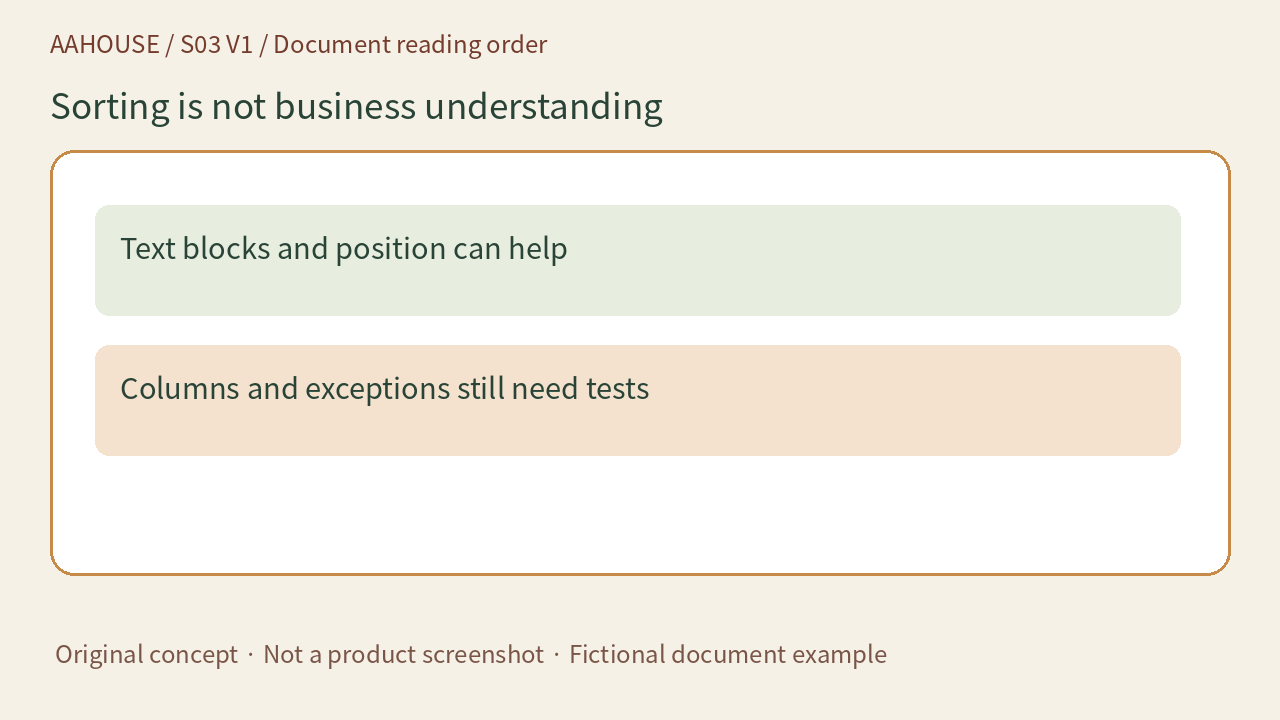
- Text blocks and position can help
- Columns and exceptions still need tests
Unchanged original source explanatory diagram.
Give the reviewer a comparison sheet
For the fictional brochure, keep three columns: original page region, extracted wording and reviewer-confirmed course association. Ask the AI reply to name the course and cite its page. Then check whether the cited passage supports the answer. If the prerequisite belongs to an uncertain section, leave the answer pending verification rather than letting fluent prose make the editorial decision.
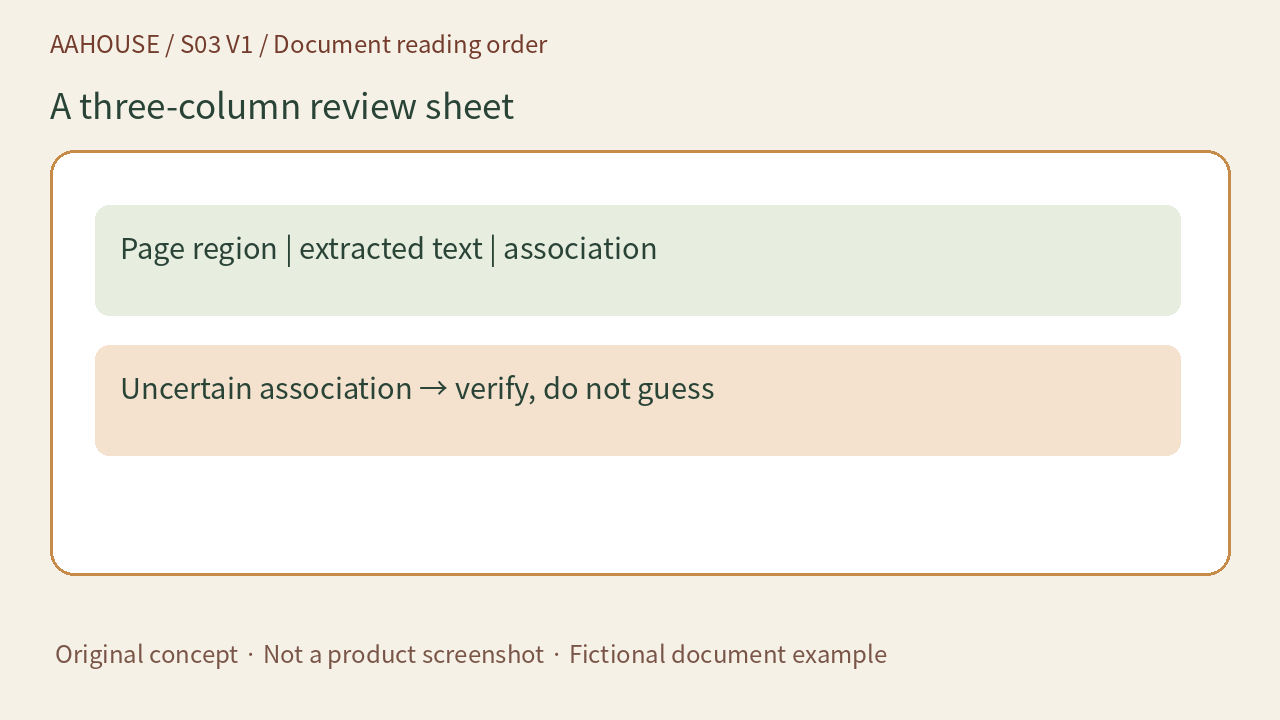
- Page region | extracted text | association
- Uncertain association → verify, do not guess
Unchanged original source explanatory diagram.
Repair the source before expanding the test
If the same layout repeatedly joins unrelated passages, simplify the source structure, retain clear headings and logical order, then export and check again. Expand the sample to include paragraphs crossing pages, footnotes and two-column layouts. Accept complete wording and correct sequence separately. Better source authoring can help colleagues as well as downstream processing, but any actual savings still need to be measured in a pilot.
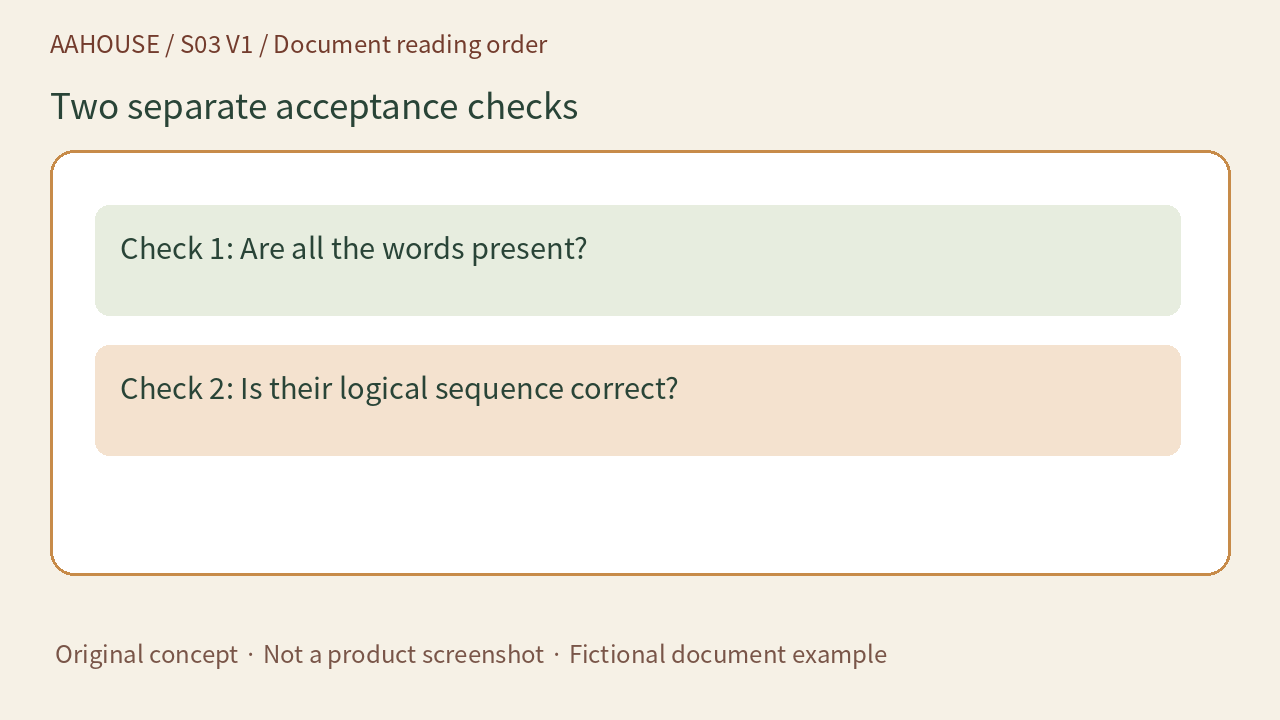
- Check 1: Are all the words present?
- Check 2: Is their logical sequence correct?
Unchanged original source explanatory diagram.