
Data · Guide
A correct number in the wrong row is still a wrong extraction
Validate relationships and table structure before trusting extracted totals.

Test relationships, not isolated cells
A table can look convincing while a quantity has moved to the next item. Layout documentation describes structural extraction, but your acceptance test should follow the business relationships. Define a row identity using a line number or a stable combination of fields. Then check that description, quantity, unit, and amount stay attached to that identity. Readable text alone does not establish a usable purchase-order record.
Keep difficult tables in the pilot
For a hypothetical distributor, include continued tables across pages, repeated headers, discount lines, and blank cells that mean the same value as above. Ask a reviewer to reconstruct several rows from the original before seeing AI output. This reveals ambiguous source material. Do not simplify the test set until all pages resemble a vendor demonstration; that would remove the very cases the workflow must handle.
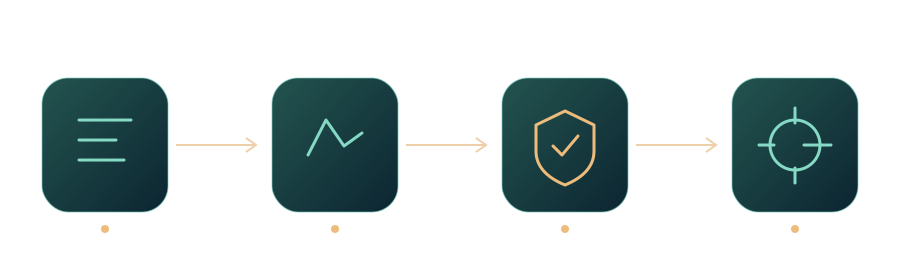
Workflow at a glance
Use arithmetic as a clue
Totals, line counts, and unit consistency can flag suspicious extraction, but they are not proof. A wrong pair of numbers may still add up, and tax or rounding rules may differ. Route mismatches to a review screen with the relevant image region. Preserve the parsed structure and the original coordinates where available so a developer can diagnose the failure without asking staff to explain the whole document again.
Choose the right success unit
Report both field accuracy and completely correct rows or documents. A process that requires every line to be checked may save little despite attractive average scores. Agree which errors can be corrected in place and which require manual re-entry. The aim is a reliable handoff into the existing system, not the largest spreadsheet of extracted values. Test downstream imports with representative exceptions before connecting production writes.
A row reconstruction exercise
Ask a reviewer to rebuild a few difficult rows using only the extraction output. Then reveal the original. Missing context becomes visible when a person cannot determine which quantity belongs to which description. Save these cases as integration tests, not just OCR examples.
Sources and further reading
- Retrieval-Augmented Generation with Azure Document IntelligenceRetrieval-Augmented Generation with Azure Document IntelligenceMicrosoft · Documentation ·
- Amazon Textract best practicesAmazon Textract best practicesAWS · Documentation ·
Editorial approach
AI-assisted original writing, checked against linked public sources. Practical recommendations and illustrative scenarios are editorial analysis, not reported client results. Source dates and product details may differ from this collection’s preparation date.