
Data · Guide
A small data dictionary can prevent a large extraction mistake
Define what each field means before asking AI to fill it.

Ambiguity starts in field names
A field called date can mean issue date, service date, due date, or the moment a document arrived. Before selecting an extraction model, write a compact specification for each business field: definition, source location, accepted format, allowed blank state, and decision owner. Google’s extractor guidance discusses descriptive fields; our recommendation is to make the same clarity visible to reviewers and downstream systems.
Keep raw and normalized values
For a hypothetical order-intake workflow, store the original printed value alongside the normalized value. A customer reference with leading zeros should not become an ordinary number simply because a spreadsheet guessed its type. Record the transformation applied and any uncertainty. This makes correction cheaper: a reviewer can see whether the mistake came from reading the document or from a later formatting decision.
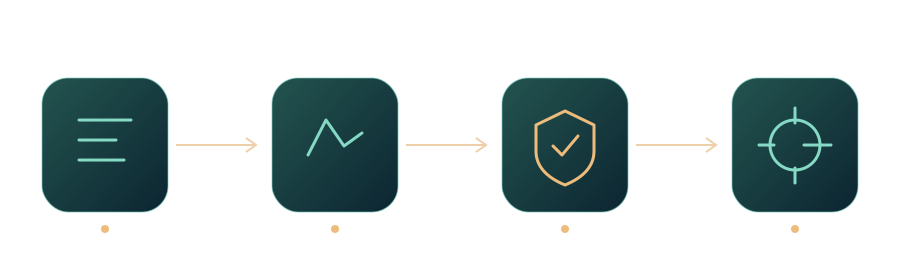
Workflow at a glance
Define absence deliberately
Separate not present, unreadable, not applicable, and not yet checked. These states have different operational consequences. An empty tax field should not be converted to zero without a business rule. Agree which missing values block the workflow and which can wait for clarification. Test several examples containing the same label with different meanings, because a clean demonstration rarely exposes the ambiguity employees encounter daily.
Version the contract
Let operations approve the dictionary and give it a version identifier. When a field changes meaning, update the extraction instructions, validation rules, test examples, and integration mapping together. Pilot success means people can consistently explain the resulting records, not merely that JSON passes validation. A schema checks structure; it does not establish the business meaning of a value that happened to fit the structure.
A field-definition exercise
Give three employees the same sample documents and ask them to fill the proposed schema independently. Compare differences before running AI. Wherever reasonable employees disagree, improve the definition or add an explicit exception rather than counting the model’s choice as correct by default.
Sources and further reading
- Custom extractor with generative AICustom extractor with generative AIGoogle Cloud · Documentation ·
- Amazon Textract best practicesAmazon Textract best practicesAWS · Documentation ·
Editorial approach
AI-assisted original writing, checked against linked public sources. Practical recommendations and illustrative scenarios are editorial analysis, not reported client results. Source dates and product details may differ from this collection’s preparation date.