
Strategy · Analysis
Services first, platform later: what must repeat?
Use customer work to discover a product boundary instead of building a generic app generator too early.

Learn from completed work
A service engagement reveals more than requested features. It exposes authorization, messy inputs, exceptions, support questions, and the language people use to describe success. OECD SME research highlights varied adoption conditions, which makes a single assumed customer journey risky. Our recommendation is to record those conditions across projects before deciding that a self-service platform is the right next investment.
Look for repeatable economics
Repeated requests are not enough if every delivery still requires bespoke integration and expert rescue. Track implementation hours, reusable components, exception rates, and monthly support. In an illustrative intake service, a common screen may hide very different data permissions. A genuine template reduces repeat work without weakening customer boundaries; it is not merely a visual copy of the last project.
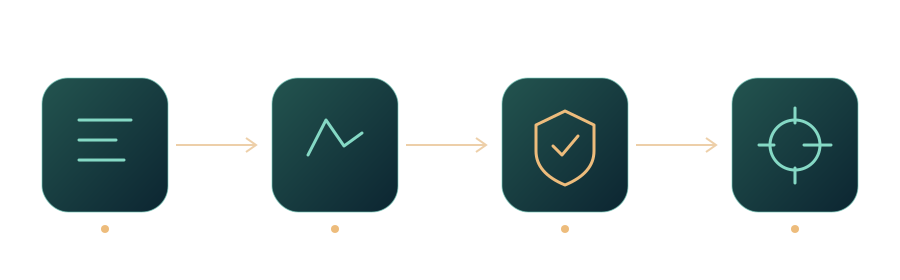
Workflow at a glance
Productize a narrow decision
Start with a guided choice that customers can make reliably, such as selecting a tested request template or adjusting an approved label. Do not expose unrestricted workflow generation simply because a model can produce code. Anthropic’s workflow-versus-agent distinction is helpful context: predictable steps can be deliberately designed. The product boundary should reflect what the business can validate and support, not the maximum freedom a prompt interface permits.
Keep service knowledge in the product
Translate recurring discovery questions into onboarding guidance, common exceptions into validation, and support patterns into observable errors. Preserve access to a person for cases the template does not fit. Set investment gates from evidence such as repeated paid demand and sustainable support, without presenting arbitrary thresholds as industry laws. A platform should emerge from a known service boundary, not substitute for discovering one.
A productization evidence register
For each candidate template, track paying demand, configuration effort, exceptional work, support cost, and the conditions that prevent reuse. Separate interest from purchased work. A template with repeated interest but no paid use remains a hypothesis. The register helps identify a sensible platform boundary and can also justify continuing a profitable service without pretending that every successful engagement must become software sold without human assistance.
Sources and further reading
- AI adoption by small and medium-sized enterprisesAI adoption by small and medium-sized enterprisesOECD · Research source ·
- Building effective agentsBuilding effective agentsAnthropic · Documentation ·
Editorial approach
AI-assisted original writing, checked against linked public sources. Practical recommendations and illustrative scenarios are editorial analysis, not reported client results. Source dates and product details may differ from this collection’s preparation date.