
Strategy · Research
Read AI productivity research without importing its headline
A study is a starting point for questions, not a ready-made forecast for your company.

Identify the setting
Before quoting a result, identify the workers, tasks, tools, time period, and outcome measured. The Stanford and NBER Generative AI at Work project examined a particular customer-support setting. Its results are useful evidence, but a different company’s proposal drafting or invoice review is not the same treatment. This article deliberately avoids converting that finding into a promised percentage saving for small businesses.
Separate adoption and impact
A survey about who uses AI answers a different question from an experiment about what happens to task performance. A vendor customer story has another purpose again. Put the evidence type beside the claim so a reader can judge it. Do not combine a high adoption figure from one source with a performance result from another as though they describe a single, proven business opportunity.
Workflow at a glance
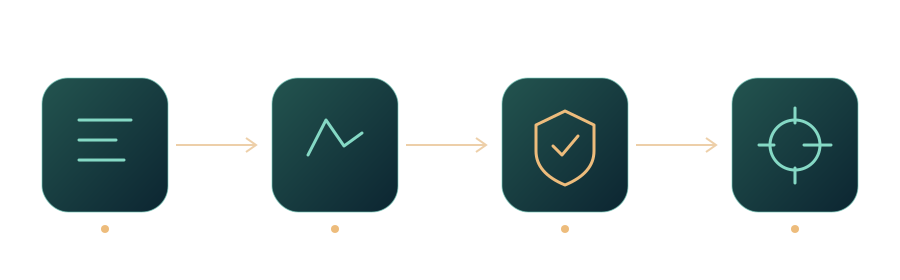
Look for changes and limits
Check whether the page describes an early tool generation, a revised paper, or a later methodological update. METR’s later discussion of its experiment design is a reminder that research can change as behavior and tools change. Preserve that history instead of treating an old number as timeless. The right lesson may be to measure locally, not to choose the most optimistic or pessimistic publication.
Turn evidence into a local hypothesis
Write a hypothesis with your workflow, baseline, and uncertainty: reviewed drafting may help newer staff, but could add checking effort for experts. Then test it with representative tasks and actual reviewers. Keep the research citation as context and the local result as separate evidence. This approach respects external work while avoiding the false confidence that a well-known institution’s name can create in a sales presentation.
A source-reading checklist
Before sharing a research headline internally, attach a short note with the setting, publication or revision date, metric, and one limitation. Add the local question it suggests. Do not present that note as a full review of the paper. It is a practical defense against a citation becoming detached from its original scope as it travels through slides, messages, and budget requests.
Sources and further reading
- Generative AI at WorkGenerative AI at WorkStanford Digital Economy Lab · Research source ·
- We are Changing our Developer Productivity Experiment DesignWe are Changing our Developer Productivity Experiment DesignMETR · Research source ·
Editorial approach
AI-assisted original writing, checked against linked public sources. Practical recommendations and illustrative scenarios are editorial analysis, not reported client results. Source dates and product details may differ from this collection’s preparation date.