
Operations · Guide
Log the decision without copying the customer’s life
Design diagnostic events that explain AI workflow failures with less sensitive content.

More text can mean less clarity
An illustrative support team logs every prompt and response to understand invoice errors. The logs soon contain bank details, client names, and repeated document copies, while nobody can tell which rule rejected a request. Start with the operational questions: what stage failed, which record was affected, and what can the owner do next? Collect fields that answer those questions rather than treating complete conversation capture as the default.
Build an event vocabulary
Define events such as extraction_rejected, approval_expired, connector_unavailable, and external_write_confirmed. Attach a request identifier, tenant reference, stage, duration, model configuration version, and a safe reason code. Keep the event schema stable so changing providers does not break operations reports. OWASP logging guidance provides relevant background; the vocabulary here is a proposed design for a service business, not a mandatory standard.
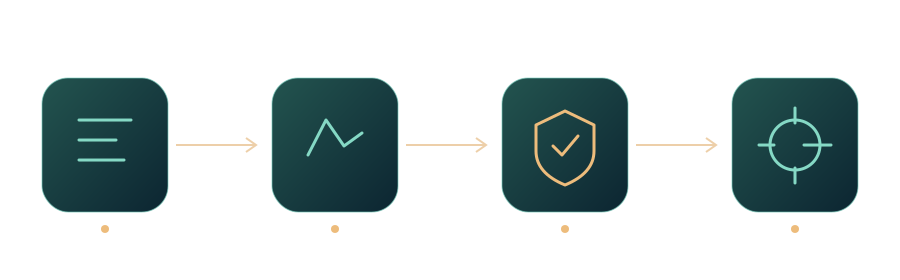
Workflow at a glance
Separate exceptional inspection
Sometimes diagnosis needs a sample input. Make that a separate, authorized process with redaction, narrow access, an expiry date, and a documented reason. Never place tokens, signed download URLs, or passwords in ordinary events. Test whether error handlers accidentally include request headers or raw documents. A log dashboard with broad employee access should not quietly become a secondary customer-document repository.
Measure usefulness and exposure
During a pilot, give an uninvolved operator several synthetic incidents and ask them to identify the next step using only the event trail. Record time to triage and requests for raw content. If the trail is insufficient, improve reason codes before expanding capture. Retention and access choices remain customer-specific. Minimal logging should still preserve evidence needed for accountability, so reduce unnecessary content rather than deleting operational history indiscriminately.
A log-access rehearsal
Ask a support user to diagnose a synthetic failure while confirming they cannot read secrets or another tenant’s events. Then grant an investigator temporary sample access. Review exported log copies too: correct permissions inside the dashboard do not control a file downloaded to somebody’s desktop.
Sources and further reading
- Logging Cheat SheetLogging Cheat SheetOWASP · Documentation ·
Editorial approach
AI-assisted original writing, checked against linked public sources. Practical recommendations and illustrative scenarios are editorial analysis, not reported client results. Source dates and product details may differ from this collection’s preparation date.