
Strategy · Guide
Build, buy, or configure: make the comparison fair
Choose the smallest sustainable solution rather than the most impressive architecture.

Define the shared outcome
Write an outcome that all options must meet: a request reaches the right reviewer with required fields and a visible status. Then compare process simplification, existing software features, a purchased product, configured automation, and custom development. Anthropic’s guidance distinguishes predictable workflows from more autonomous agents. That distinction helps frame the technical options, but the customer’s actual operating need should define the contest.
Use the same trial cases
Give each option the same representative inputs and have the same people review the outputs. In an illustrative agency, one product may produce attractive drafts but require manual re-entry into its CRM. Another may produce less polished drafts yet preserve the existing handoff. Include those downstream steps in the comparison. Otherwise, a feature demonstration can appear cheaper by pushing work outside the visible interface.
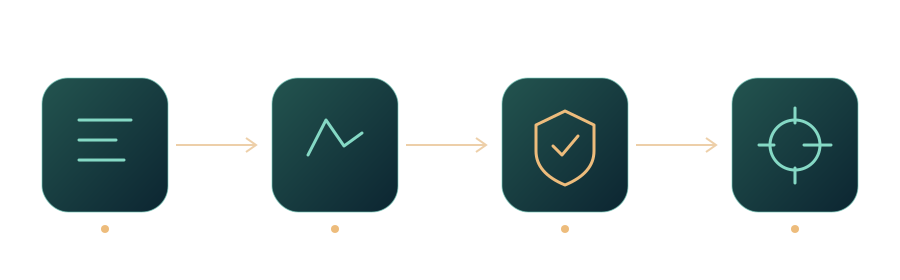
Workflow at a glance
Evaluate ownership and exit
Ask who can change a rule, export records, restore a failed job, and explain an unexpected result. A custom application gives flexibility but also creates maintenance obligations. A purchased product can reduce engineering work while introducing vendor constraints. Write the exit steps before signing: data export, credential removal, replacement integration, and the person responsible for continuity. None of these options is automatically superior for every small company.
Make the reversible choice first
When uncertainty is high, prefer a bounded test that can be reversed without losing authoritative records. Use configuration until evidence justifies custom code; use custom code when repeated gaps make configuration fragile. Record the reason, assumptions, and trigger for reconsideration. A fair comparison can end with a non-AI improvement, which is a stronger service outcome than forcing AI into a task it does not improve.
A fair comparison table
For each option, use columns for approved outcome, total task effort, operating owner, recurring costs, constraints, and exit steps. Put unknowns in the table rather than scoring them optimistically. Ask vendors to correct misunderstandings about their own offers. A useful comparison is transparent enough that another manager can see why a cheaper or simpler option won without needing to share the evaluator’s preferred technology stack.
Sources and further reading
- Building effective agentsBuilding effective agentsAnthropic · Documentation ·
- AI RMF Playbook: ManageAI RMF Playbook: ManageNIST · Documentation ·
Editorial approach
AI-assisted original writing, checked against linked public sources. Practical recommendations and illustrative scenarios are editorial analysis, not reported client results. Source dates and product details may differ from this collection’s preparation date.