
Economics · Guide
Release the AI budget in stages
Fund the next piece of evidence before funding a broad platform.

Link spending to a question
A staged budget starts with questions: is the problem important, is the proposed workflow feasible, and will the result justify continued operation? Assign a modest spending envelope to answer each question. Do not label all early costs platform investment. That can hide whether an individual customer need deserves attention. The budget should make it possible to stop while preserving useful research and a clear account of what was learned.
Separate discovery, pilot, and operation
Discovery pays for process observation and option comparison. A pilot pays for bounded implementation and measurement. Production pays for reliability, access administration, support, and recovery. These phases can overlap, but their cost logic differs. An illustrative small firm should not use a successful workshop as the automatic release condition for a company-wide rollout; it has not yet tested daily use or ongoing obligations.
Workflow at a glance
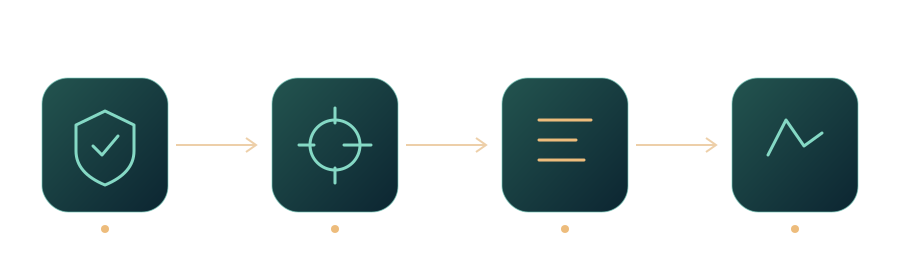
Define release conditions
Use concrete gates: a named owner, usable examples, an approved scope, acceptable test results, and an agreed support responsibility. Thresholds are management choices and should be labeled as such, not universal industry standards. If a gate is missed, decide whether to repair that gap or abandon the use case. A calendar deadline alone is a weak reason to proceed with an unready workflow.
Protect a learning reserve
Keep reserve funding separate from promised features. Use it for a justified uncertainty, such as testing a difficult integration or improving representative evaluation data. Do not spend it merely to rescue a preferred architecture. After each stage, update the remaining cost range and benefit assumptions. This creates an investment process that can change its mind without treating every revision as a failure.
An investment memo for the next stage
Use a short memo containing the question answered, evidence obtained, revised cost range, and decision requested. Include a stop option with its consequences. This makes the next funding discussion about the current information rather than the original excitement. Retain the previous memo so changes in assumptions are visible. The history becomes valuable when a platform proposal later claims that many customer needs have already been validated.
Sources and further reading
- AI RMF Playbook: ManageAI RMF Playbook: ManageNIST · Documentation ·
- 2025: The year the Frontier Firm is born2025: The year the Frontier Firm is bornMicrosoft · Research source ·
Editorial approach
AI-assisted original writing, checked against linked public sources. Practical recommendations and illustrative scenarios are editorial analysis, not reported client results. Source dates and product details may differ from this collection’s preparation date.