Operations · Guide
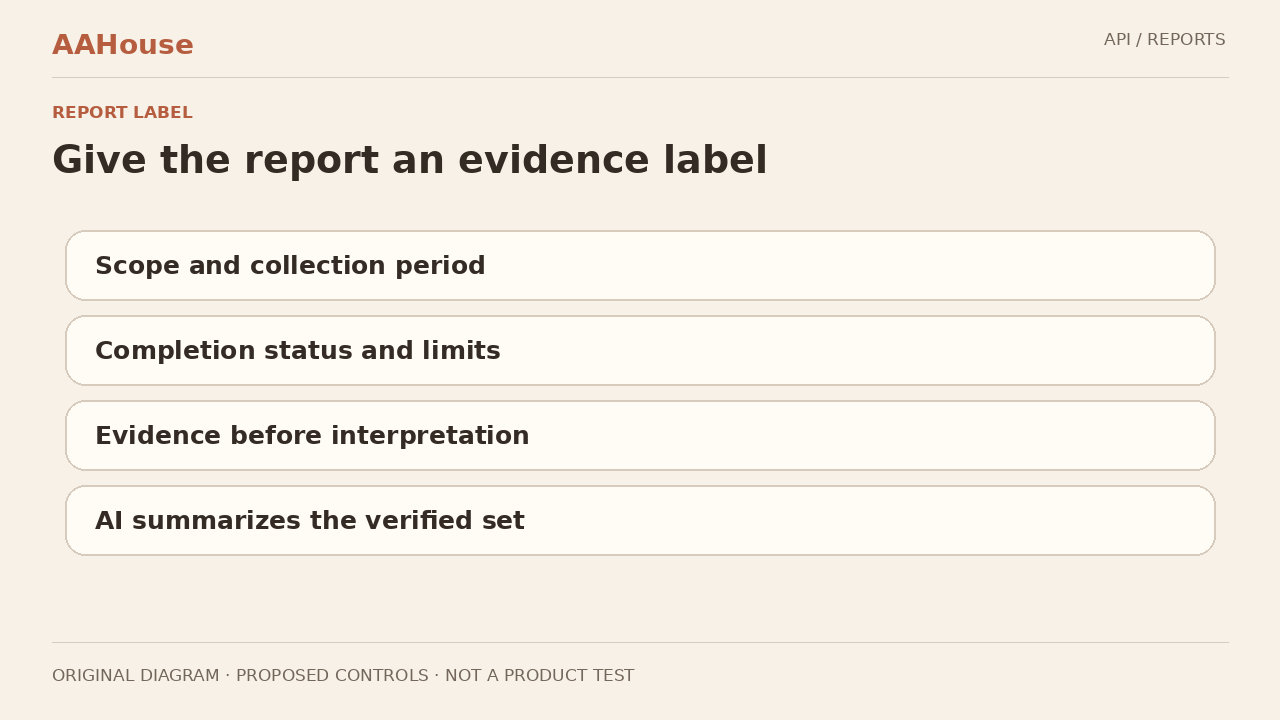
The first page is not the whole AI report
Compare complete, partial, and empty outcomes before trusting the conclusion.
The first page is not the whole AI report
Original AAHouse explanatory video. AI-assisted conceptual visuals and neural narration; original music.
Simplified Chinese Mandarin transcript · English transcript · Taiwan Mandarin transcript · Hong Kong Cantonese transcript · Macao Cantonese transcript
One report, three endings
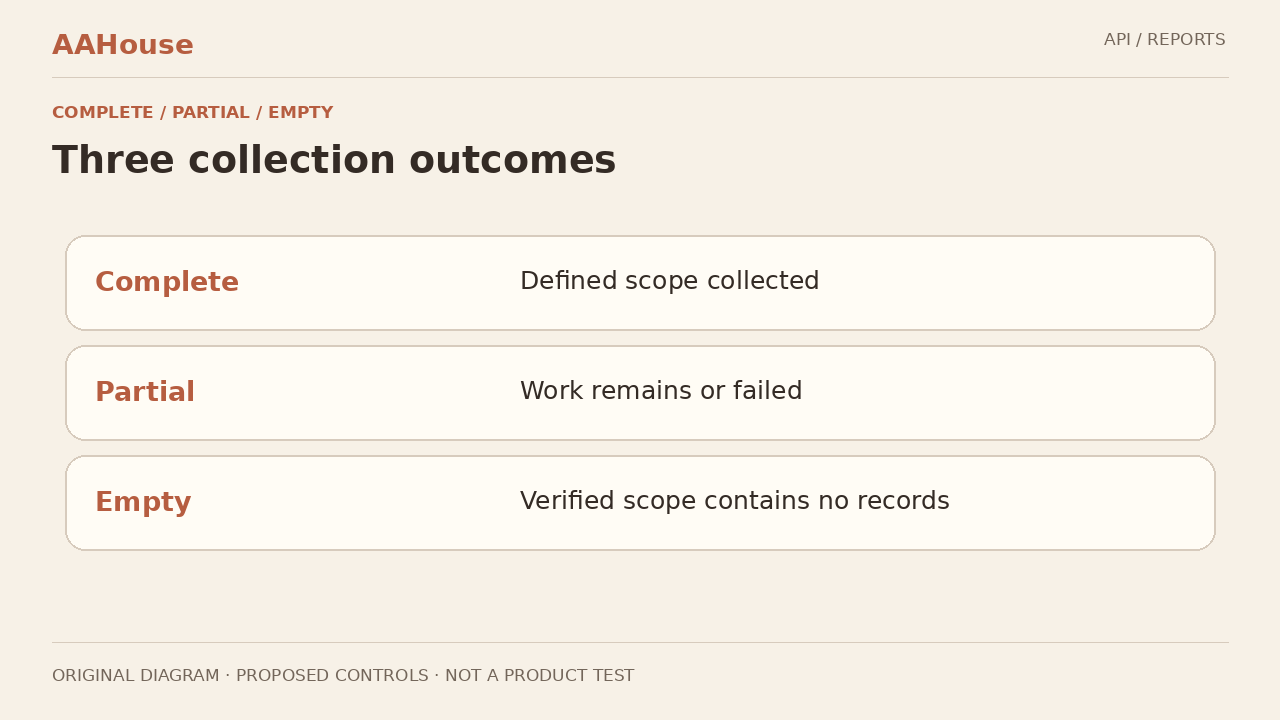
Imagine a U.S. service team asking AI to summarize open work orders. The first response arrives and a fluent summary appears, but another page may still be waiting. Compare three hypothetical endings: collection completed, collection partial, and an established empty result. They should not share one finished label. This walkthrough concerns the collection boundary before summarization; it is not a reported customer incident or a claim that an integration has been tested.
Ending A: the first batch looks complete
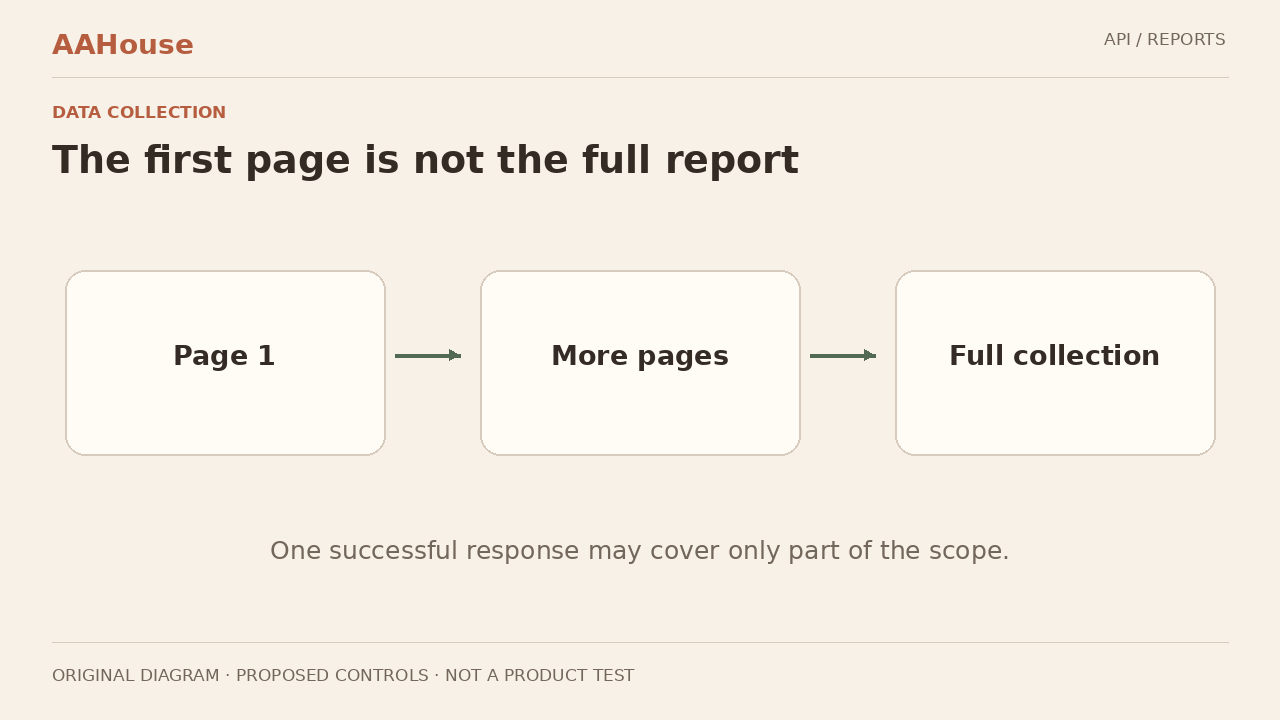
If a connector gives the model only the first page, accurate prose can still omit later work orders. GitHub documents returning a subset of results and supplying subsequent-page links through response headers.[1] That is a specific interface pattern, not a format every service shares. Our recommendation is to establish whether the connector follows the actual continuation mechanism before scoring the summary. A larger model context does not retrieve records the connector never collected.
Ending B: an interruption becomes a conclusion
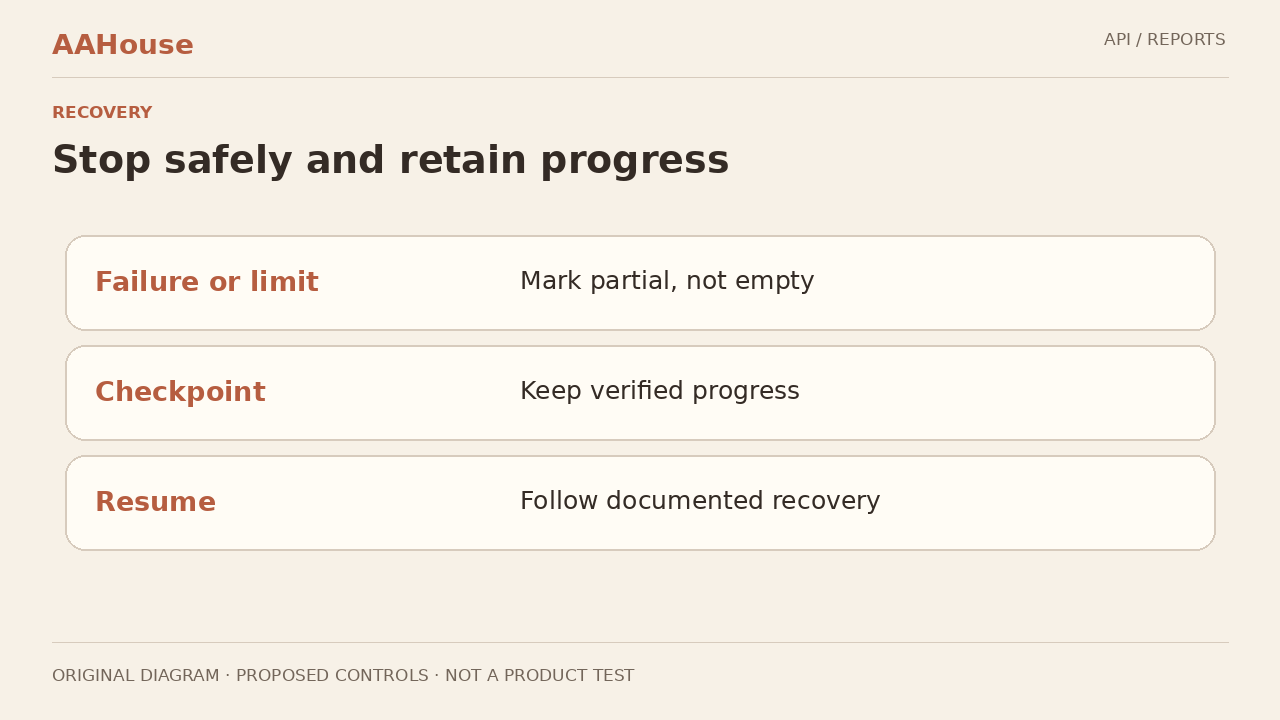
Another path reads several pages and then fails. Confirmed partial records may be useful, but they cannot stand in for the whole collection. Retain the collected scope and stopping reason and label the result partial. The business owner can choose to wait or inspect it. Do not let the model reinterpret an unavailable page as an absence of more work. Recovery should retain the collection identity and prevent repeated records from inflating the report.
Ending C: an empty page is not always the end
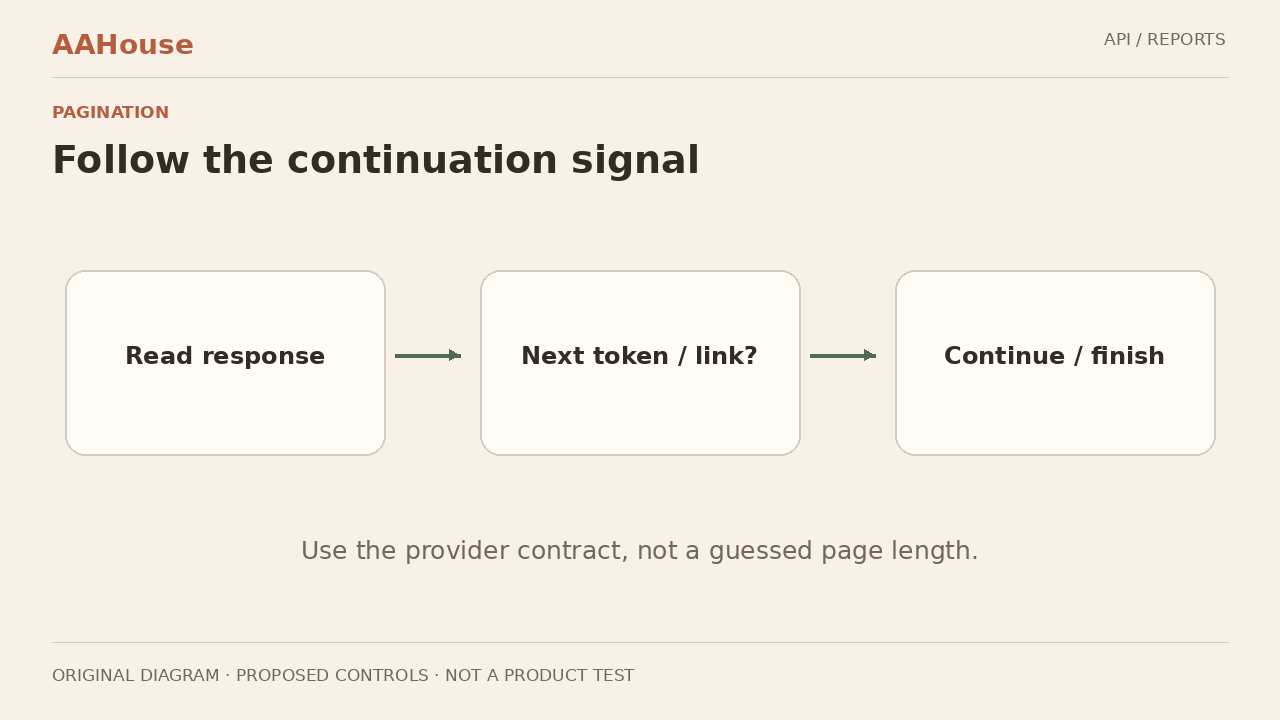
Google’s AIP-158 design guidance permits fewer items than requested, even zero, before a collection ends. It identifies an empty next-page token as the end signal.[2] A short or empty page alone is therefore not a safe generic stopping rule. Follow the actual service contract, rather than assuming every API implements this guidance. The important comparison is between a page with no items and a collection whose end has actually been established.
The comparison needs a stable scope
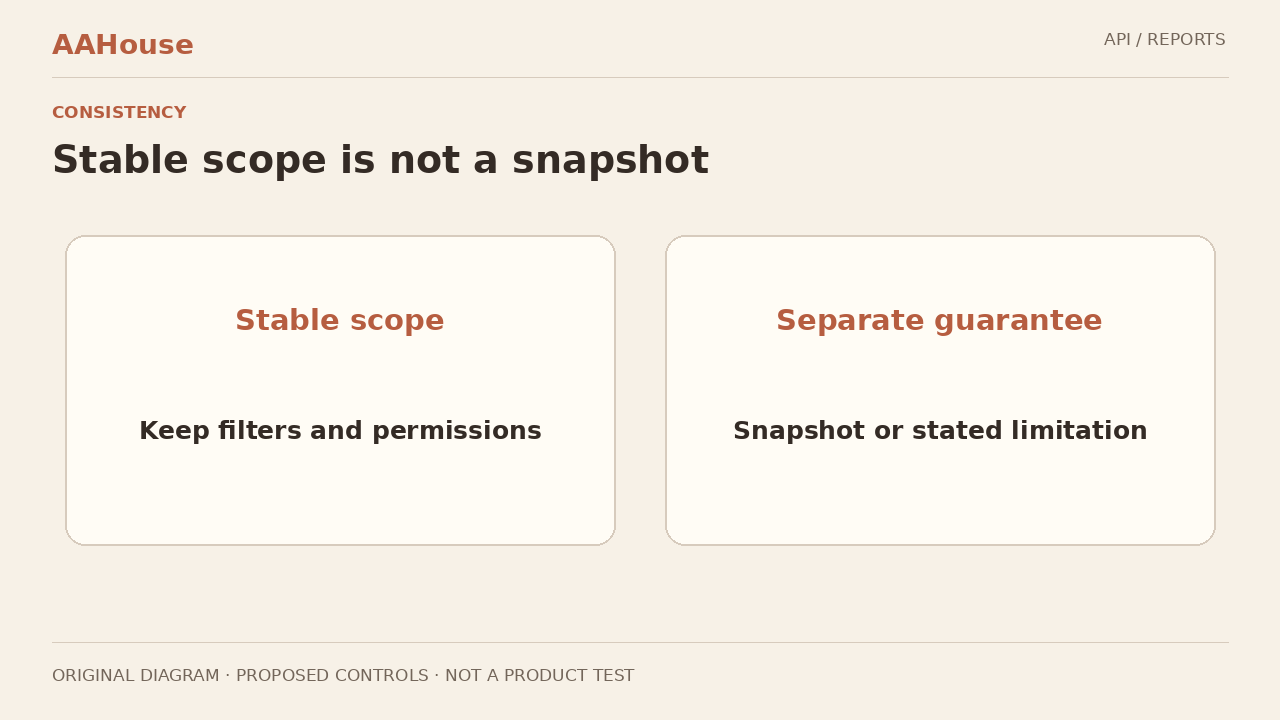
Define filters, account scope, ordering, and the reporting window for each collection. Google’s guidance keeps other arguments consistent across continuation requests, with a separate rule for page size.[2] For the real service, also verify how changes during collection are handled. Reaching the last page does not itself establish a point-in-time snapshot. If the source supplies no snapshot guarantee, describe that limitation rather than inventing an exact cutoff that the evidence cannot support.
An evidence card beats “read everything”
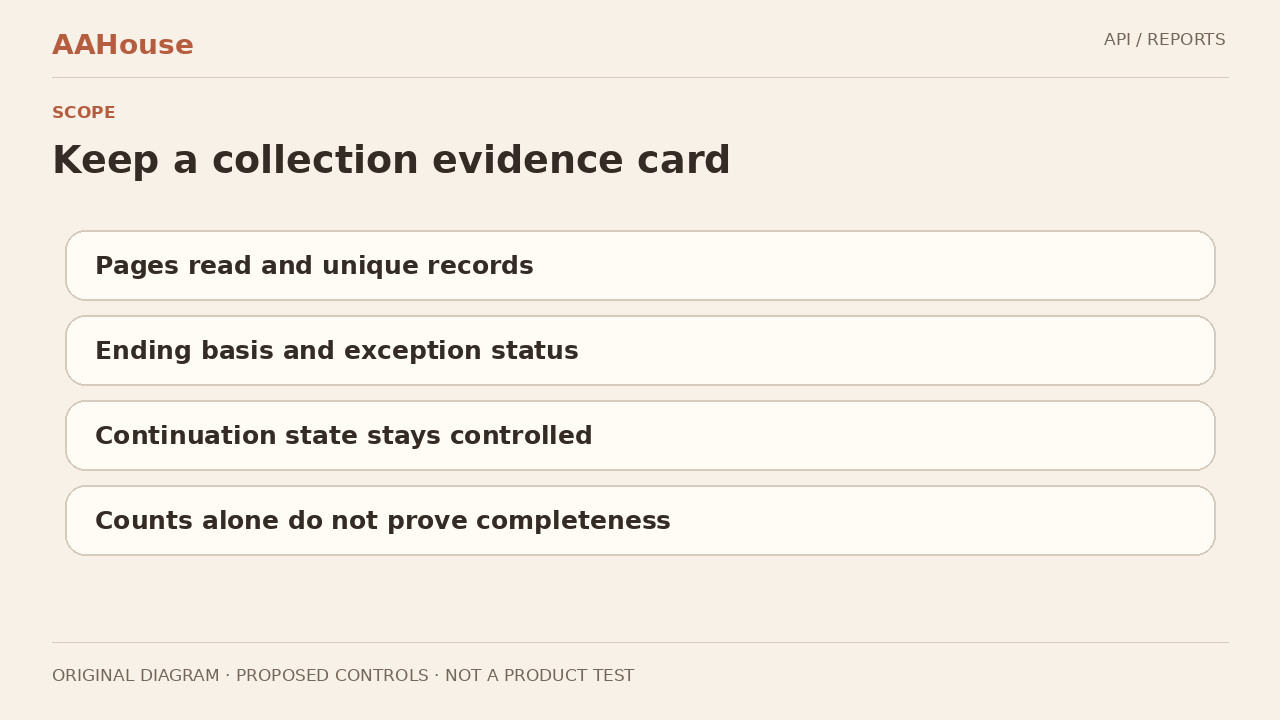
Have the connector produce an evidence card: pages read, unique records retained, continuation state, termination basis, and exceptions. Keep raw continuation tokens in controlled state rather than exposing them to report readers. Give the model only authorized records and the scope description. Counts support reconciliation; they do not independently prove completeness. A tidy round number should not invite the model to invent the size of the unseen collection.
A controlled comparison before prose
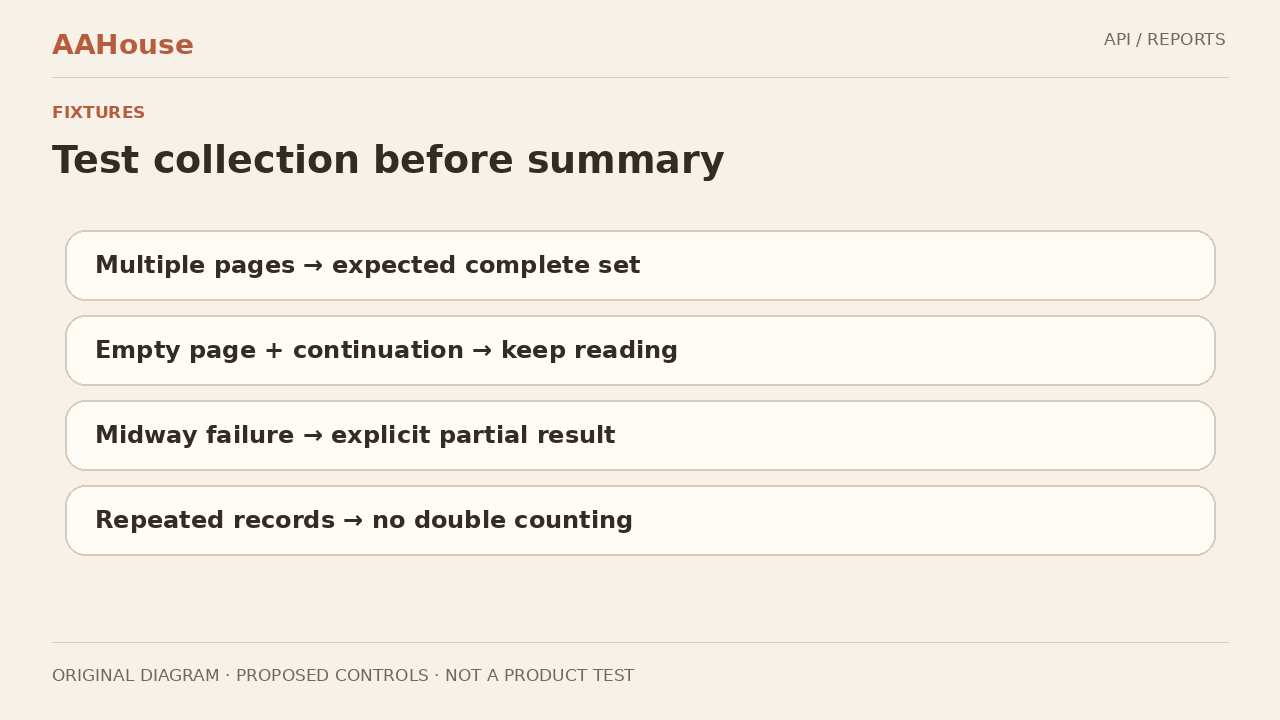
Use invented fixtures for one page, multiple pages, an empty page with continuation, repeated records, and interrupted recovery. Specify the expected record set, ending condition, and partial-result states before generating prose. Check that recovery does not broaden permissions or filters. These are proposed acceptance tests, not results from a production integration. Compare collected identifiers with the fixture first, then assess whether the narrative describes that established scope faithfully.
The choice: establish scope, then polish
Begin with one recurring report and display complete, partial, and established-empty outcomes separately. Keep continuation rules and test fixtures with the connector and rerun them when its interface changes. Reviewers can then decide whether the available evidence supports using the conclusion. Complete collection does not guarantee correct analysis. It does, however, prevent fluent writing from quietly standing in for records that were never read.