
Operations · Guide
A New URL, the Same Booking? Three Redirect Acceptance Cards
Use three redirect acceptance cards to check request methods, receipts and authorized destinations before confirming a booking.
A New URL, the Same Booking? Three Redirect Acceptance Cards
Original AAHouse explanatory video. AI-assisted conceptual visuals and neural narration; original music.
English transcript · Simplified Chinese Mandarin transcript · Taiwan Mandarin transcript · Macao Cantonese transcript
The page opened. Did the reservation exist?
Imagine a U.S. equipment-rental shop moving an old booking endpoint to a new address. Its automation submits a reservation, reaches a successful page, and tells the customer that equipment is reserved. A page loading is not evidence that inventory was allocated. This is a hypothetical scenario, not a customer incident. A migration acceptance exercise separates three questions: where the request went, what action it performed, and what the business recorded. This is analysis, not a product announcement or a report of tests performed.
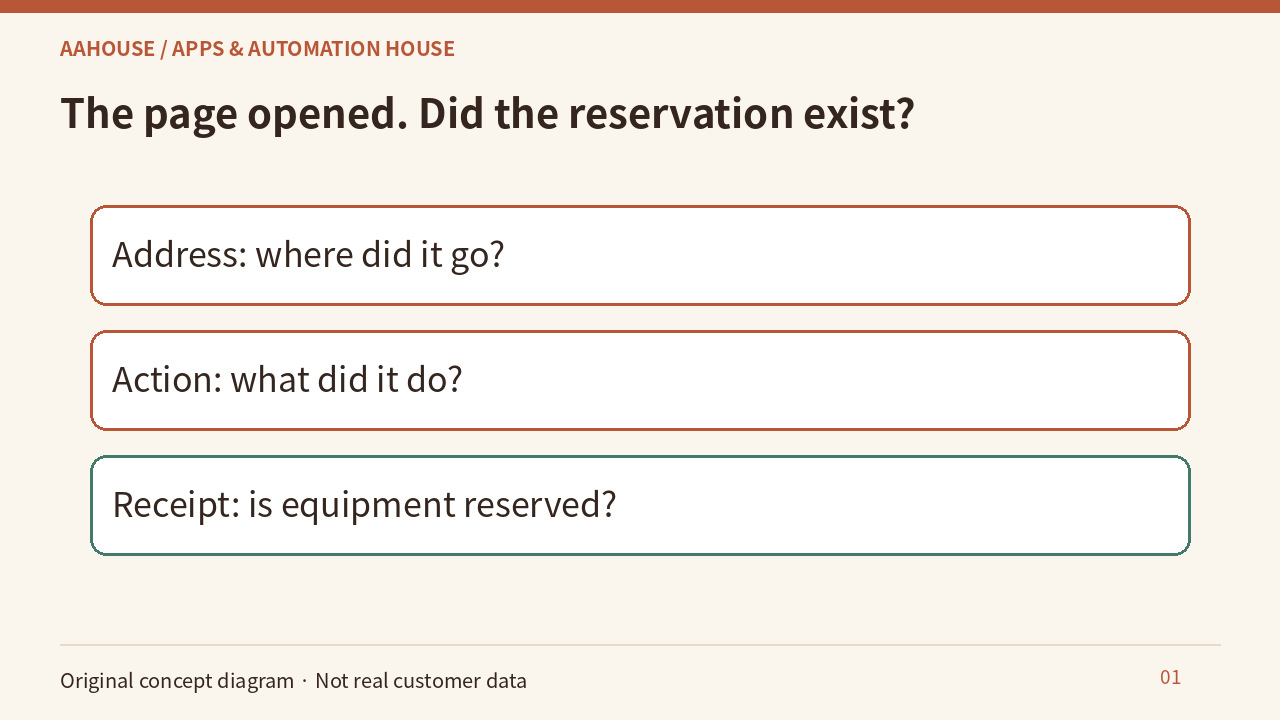
- Address: where did it go?
- Action: what did it do?
- Receipt: is equipment reserved?
Unchanged original source explanatory diagram.
Acceptance card one: did the method change?
RFC 9110 permits a client following a 301 or 302 response to change a subsequent POST into GET. A 307 or 308 preserves the method; they indicate temporary and permanent redirection respectively. [1][2] Therefore, do not record only the final status code. In an isolated test environment, capture each hop’s address and method, and whether the synthetic request body arrived. Keep actual customer information out of debugging logs.
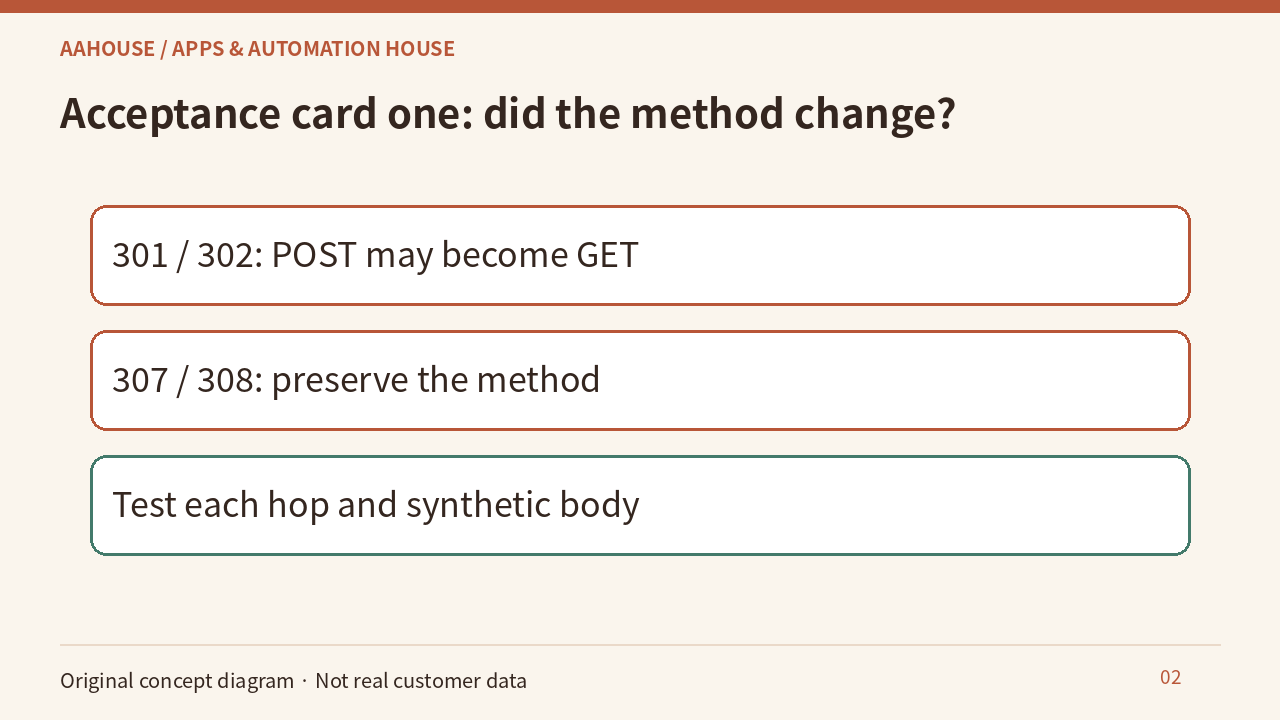
- 301 / 302: POST may become GET
- 307 / 308: preserve the method
- Test each hop and synthetic body
Unchanged original source explanatory diagram.
Acceptance card two: read a receipt or repeat an action?
A 303 directs the client to retrieve an indirect result from another resource; it is not a request to perform the original action again. [3] For the rental shop, displaying a receipt after a reservation is written can be designed separately from forwarding an unprocessed reservation to a new endpoint. That is an architectural recommendation, not a claim that every booking system uses one pattern. Label each address as execution or presentation before deciding how the client should follow it.
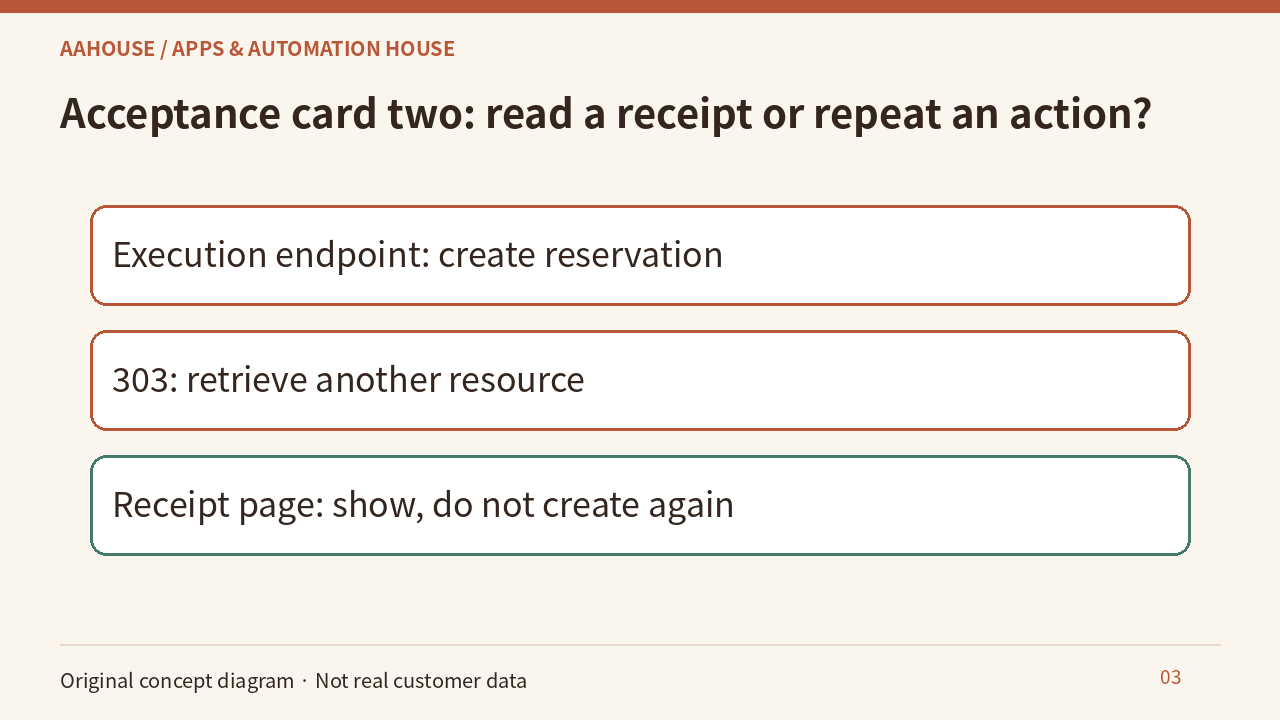
- Execution endpoint: create reservation
- 303: retrieve another resource
- Receipt page: show, do not create again
Unchanged original source explanatory diagram.
Acceptance card three: may this destination receive the data?
Method preservation is not forwarding authorization. Our recommendation is to list permitted destination domains and paths in the migration plan. Stop automatic following for an unknown destination, an unencrypted downgrade, or a redirect loop, and assign an owner to investigate. Verify that the client does not deliver sensitive headers or bodies to unapproved destinations. Do not force authentication headers through just to make a test pass. These are proposed controls, not a guarantee about any client’s defaults.
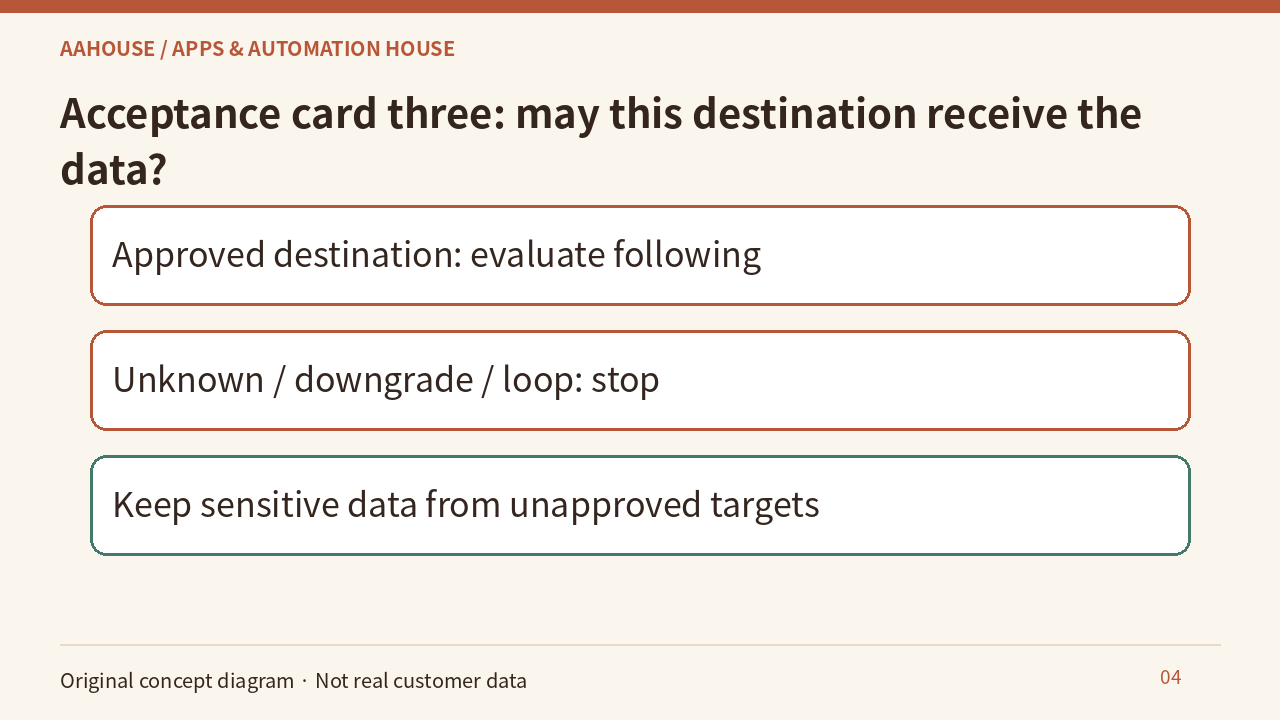
- Approved destination: evaluate following
- Unknown / downgrade / loop: stop
- Keep sensitive data from unapproved targets
Unchanged original source explanatory diagram.
Put three outcomes on one test sheet
Proposed case one: the old address routes to an approved new endpoint; verify the business receipt for that same synthetic booking. Case two: a completed write leads to a receipt page; verify that no second reservation was created. Case three: an unapproved destination causes a safe stop without sending the body. For each case, record expected action, observed chain, and final booking state. These are acceptance cases to execute, not results already obtained.
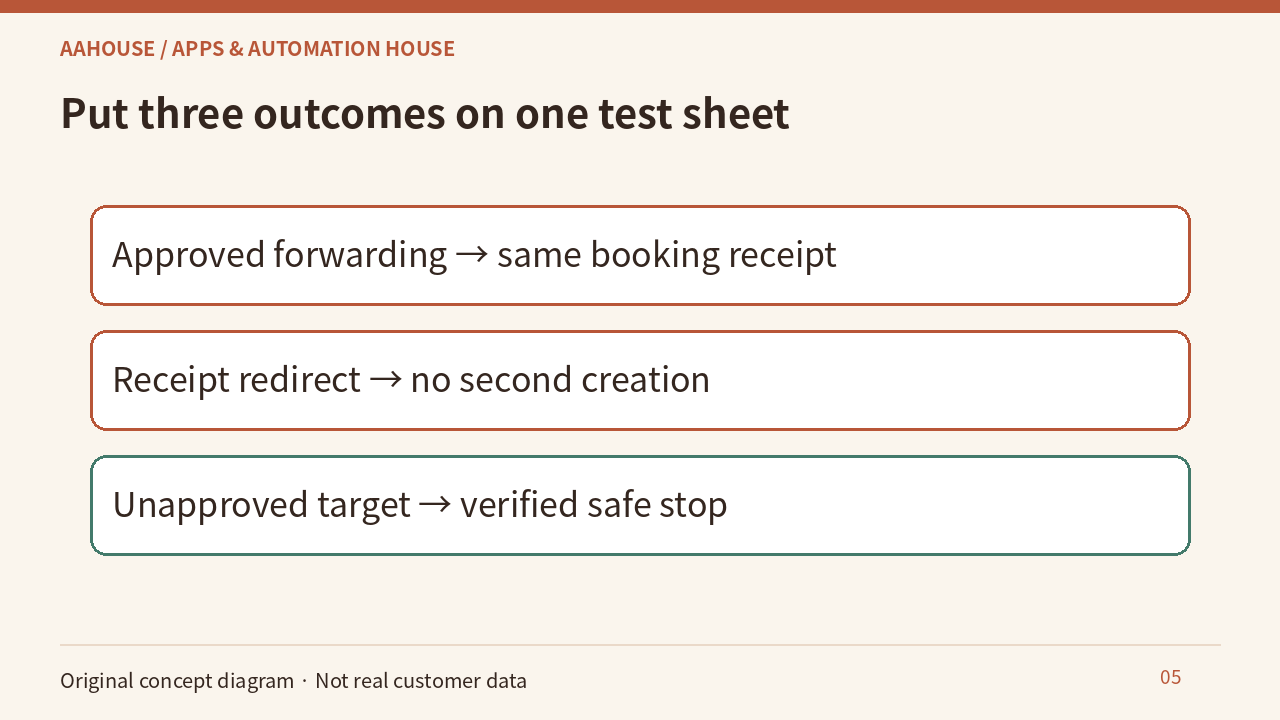
- Approved forwarding → same booking receipt
- Receipt redirect → no second creation
- Unapproved target → verified safe stop
Unchanged original source explanatory diagram.
Ask one business question before the cutover
When the customer receives confirmation, what evidence proves this equipment is reserved? The answer should identify a verifiable booking reference and state, not a browser address or green success page. Retain evidence for both entry points and name the person who reconciles exceptions before deciding whether to release the migration. Do not infer the outcome by repeatedly submitting. Reconcile uncertainty first so that one customer need does not become two reservations.
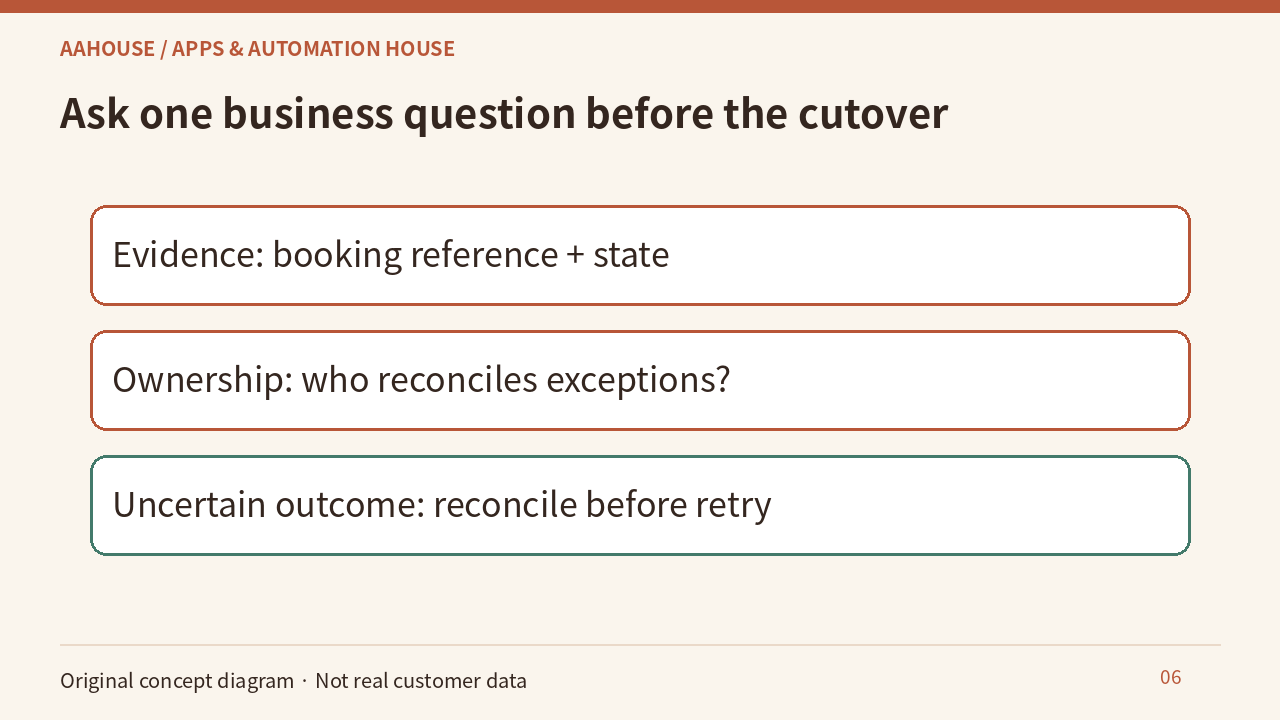
- Evidence: booking reference + state
- Ownership: who reconciles exceptions?
- Uncertain outcome: reconcile before retry
Unchanged original source explanatory diagram.