
Operations · Research
Reading the 2026 Work Trend Index as an operating-model question
Use vendor research to frame a local experiment, not to import a productivity promise.

What the source can tell us
Microsoft’s May 2026 Work Trend Index discusses the relationship between individual AI practice and organizational conditions. That is useful context, but it is not a controlled forecast for a small business. Before using any headline, ask who was surveyed, which behaviors were observed, and whether a statement describes association, opinion, or measured outcomes.
Look for an organizational bottleneck
An illustrative team has capable AI users but cannot agree on what information may be shared or who approves outputs. More prompt training may not address that bottleneck. Interview staff about the last blocked task and trace the decision that stopped it. The practical question is whether the team lacks skill, authority, source access, or a common quality standard.
Workflow at a glance
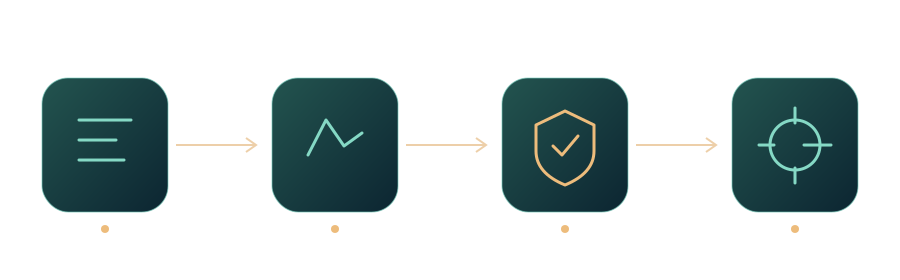
Run a narrow management experiment
Choose one recurring task and agree on permitted inputs, review responsibility, and a shared example of acceptable output. Compare a short trial with the current workflow, including review time and unresolved questions. Ask managers to attend the review rather than simply demand more usage. This tests an operating change without treating the vendor’s narrative as a causal claim.
Keep the conclusion local
Record what changed for this team, which conditions were necessary, and what did not improve. Do not turn one successful trial into a company-wide savings forecast. Revisit the experiment when staffing or tools change. Research becomes operationally valuable when it improves the questions a business asks, not when it supplies an impressive percentage for a sales slide.
A practical next step
Make a three-column note for a research claim: what was observed, what remains unknown locally, and which experiment could change the decision. Bring it to a workflow review. If the claim cannot connect to a testable local question, retain it as background reading rather than a purchase justification or performance target.
Sources and further reading
- 2026 Work Trend Index: Agents, human agency, and opportunity2026 Work Trend Index: Agents, human agency, and opportunityMicrosoft WorkLab · Research source ·
- Microsoft 365 for Small and Medium BusinessMicrosoft 365 for Small and Medium BusinessMicrosoft Adoption · Documentation ·
Editorial approach
AI-assisted original writing, checked against linked public sources. Practical recommendations and illustrative scenarios are editorial analysis, not reported client results. Source dates and product details may differ from this collection’s preparation date.