
Knowledge · Analysis
When two policies disagree, the model should not cast the deciding vote
Treat conflicting instructions as a content-governance problem before adjusting prompts.

Make authority explicit
Suppose an illustrative agency has a recent slide saying expenses need manager approval while an older handbook specifies a finance review. The date alone does not settle authority: the slide could be training material rather than a policy change. Give documents an owner, approval status, effective period, and scope. Retrieval metadata can help select material, but it cannot decide which department has the right to set the rule.
Build an exception path
Have the assistant show the conflicting passages and ask the designated policy owner to resolve them. Avoid silently blending both into a third instruction that nobody approved. During the pilot, keep a conflict log with the question, source versions, responsible reviewer, and resolution. This turns awkward answers into a manageable editorial task and helps reveal where the company itself lacks a consistent operating agreement.
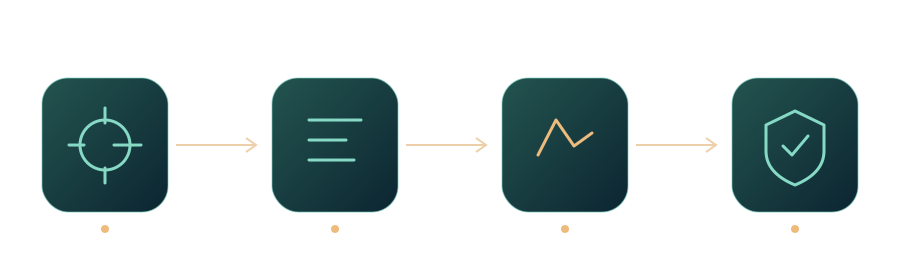
Workflow at a glance
Test scope as well as date
A rule for one client or location may coexist legitimately with a general policy. Include tests where the same words occur in documents for different contracts, teams, or effective dates. Store only the metadata your application can maintain reliably. An elaborate hierarchy that nobody updates becomes another source of false certainty. First handle the few distinctions that actually change the answer in your chosen workflow.
Publish the resolution
After a decision, update or retire the authoritative documents and refresh the search index. Do not leave the resolution only in a chat transcript. Re-run the original conflict question and one nearby case to verify the new boundary. The linked metadata and provenance resources support traceable retrieval; the responsibility to approve a business policy remains with the organization, not with an embedding model or vendor.
A conflict drill
Create two synthetic procedures with a deliberate disagreement. Ask staff to resolve the authority question without using the assistant. Their process becomes the escalation rule the application must support; the model should make that process easier, not replace it.
Sources and further reading
Editorial approach
AI-assisted original writing, checked against linked public sources. Practical recommendations and illustrative scenarios are editorial analysis, not reported client results. Source dates and product details may differ from this collection’s preparation date.