
Knowledge · Research
Contextual retrieval: add orientation, not hidden policy
Use document context carefully and test whether it improves retrieval for your own corpus.

Understand the narrow idea
Anthropic’s contextual-retrieval work explores giving isolated chunks more document context before indexing. The important business question is not whether the method sounds advanced, but whether a short passage becomes easier to identify correctly. A fragment that says approval is required may need the product line or policy section to be useful. That contextual label should explain origin, not introduce a new business instruction.
Separate generated context from source
For an illustrative operations manual, store the original passage and the added orientation separately. Let a reviewer see both. If an automatic contextualizer labels a general exception as a customer-specific rule, retrieval can become worse while the label looks helpful. Keep a short audit sample of changed labels and record the model and template used to produce them. Treat those labels as derived data, not approved policy.
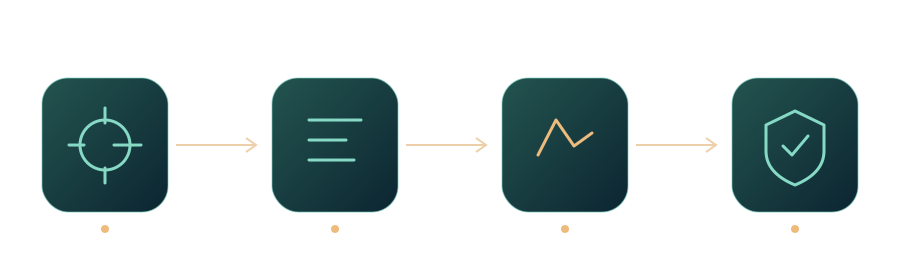
Workflow at a glance
Test difficult short passages
Create questions around pronouns, inherited headings, abbreviations, and similarly named services. Compare retrieval with and without added context on identical inputs. Judge whether the correct evidence appears, whether irrelevant material is displaced, and whether citations still expose the original passage. Avoid reporting a single favorable question as proof. A useful experiment needs failures and boundaries as well as successful examples.
Adopt only when maintenance is justified
A corpus with frequent changes needs regenerated labels, regression tests, and a way to retire old versions. Count this operational work in the comparison. If headings and metadata already solve the retrieval gap, generated context may add little value. The practical lesson is to improve the information available to retrieval deliberately, then keep only the complexity that the evidence from your own test set supports.
An orientation-label audit
Ask a policy owner to read only the generated orientation labels and identify claims that were never approved. Then inspect those claims against the source. Remove labels that change authority or scope; improved retrieval is not worth creating a shadow policy collection.
Sources and further reading
- Introducing Contextual RetrievalIntroducing Contextual RetrievalAnthropic · Research source ·
- Configure and customize queries and response generationConfigure and customize queries and response generationAWS · Documentation ·
Editorial approach
AI-assisted original writing, checked against linked public sources. Practical recommendations and illustrative scenarios are editorial analysis, not reported client results. Source dates and product details may differ from this collection’s preparation date.