
Operations · Guide
A 90-day learning cadence for an AI workflow
Organize discovery, pilot evidence, and operational learning without promising a fixed implementation deadline.

Watch the source video
Amazon Web Services · Bringing Generative AI to Market with AWSBringing Generative AI to Market with AWS Watch at source ↗
Video playback loads YouTube only after you press play.
Use time as a review boundary
An illustrative owner wants a 90-day AI plan. Use that period to structure decisions rather than promise a finished platform. Start by choosing one workflow and naming the evidence needed to continue. Different access requirements and integrations may change delivery time. The cadence is a management aid, not a forecast that customer demand or technical readiness will arrive on schedule.
First cycle: observe and compare
Map recent cases, collect a baseline, and compare process simplification, existing software, and a bounded AI option. Assign an operating owner before building. End the cycle with a go, revise, or stop decision and the reasoning behind it. Stopping an unsuitable use case is valuable evidence, not a reason to relabel it as a successful prototype.
Workflow at a glance
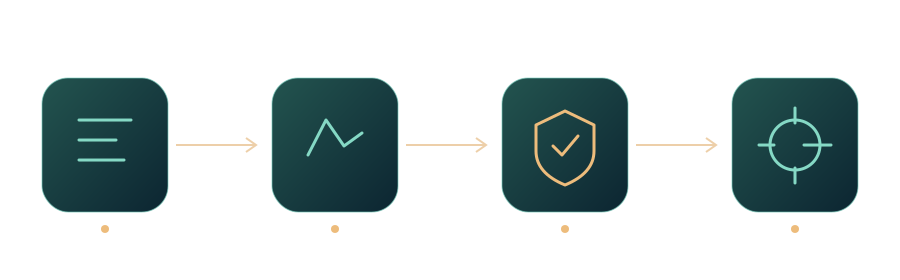
Second cycle: test the work, not the pitch
Run representative cases with real review effort and an agreed exception path. Include failure, correction, and handover. Compare outcomes with the baseline and record changed assumptions. Vendor videos can help teams discuss possibilities, but they do not validate the local workflow. Keep commercial claims separate from observed pilot results until the evidence supports them.
Third cycle: decide what to standardize
If the pilot earns continuation, define ownership, support, monitoring, and a small improvement backlog. Review repeated needs before turning them into a reusable package. If results disappoint, narrow the scope or return to a simpler option. A sustainable AI practice is a sequence of evidence-based operating decisions, not a race to fill the roadmap with autonomous features.
A practical next step
At the first review, ask for the strongest reason to continue and to stop. Design an experiment that could change the decision. If nothing could change the plan, it is a commitment ritual rather than learning. Include review, support, and exceptions so the next cycle produces an operating judgment rather than only a better demonstration.
Sources and further reading
- Bringing Generative AI to Market with AWSBringing Generative AI to Market with AWSAmazon Web Services · Video source ·
- Generative AI lifecycle — Generative AI LensGenerative AI lifecycle — Generative AI LensAmazon Web Services · Documentation ·
Editorial approach
AI-assisted original writing, checked against linked public sources. Practical recommendations and illustrative scenarios are editorial analysis, not reported client results. Source dates and product details may differ from this collection’s preparation date.