
Evaluation · Guide
Choose models by the knowledge task, not by one flagship name
Separate parsing, retrieval, classification, and answer generation in your evaluation.

Draw the task chain
A knowledge assistant may use one component to read files, another to retrieve evidence, and another to compose an answer. Compare these stages independently before changing every model at once. In an illustrative support workflow, incorrect answers might originate in missing text rather than reasoning. A more capable answer model cannot reliably recover a clause that the parser never supplied. Keep the initial architecture simple enough to diagnose.
Define different acceptance tests
Parsing needs correct fields and structure; retrieval needs the right passages; classification needs stable routing; generation needs supported, clear responses. Give each stage a small test set and an owner. Use model-evaluation services as tooling rather than as a substitute for these criteria. An aggregate quality score can mask a system that writes beautifully while assigning requests to the wrong queue or quoting a stale document.
Workflow at a glance
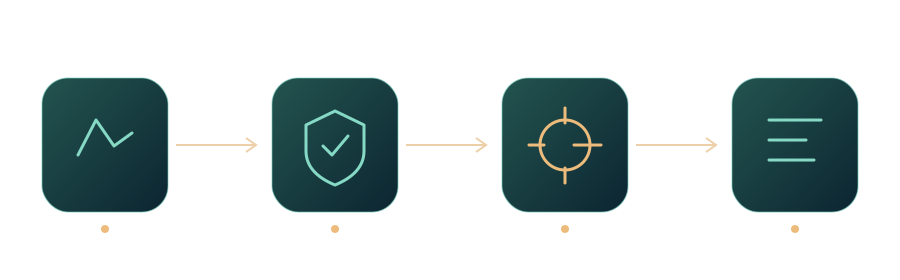
Route exceptions deliberately
If you introduce a cheaper model for routine classification, define exactly which uncertainty sends the task to a stronger model or a person. Avoid endless automatic retries that create cost without better evidence. Log route, reason, and outcome. A fallback path should be tested with representative difficult inputs, not merely exist as an architectural arrow. Keep permissions consistent regardless of the model selected.
Prefer justified complexity
Every added model creates monitoring, versioning, and support work. Compare the total system against a simpler baseline before accepting routing complexity. Review latency and human handling time as well as usage charges. The linked evaluation guidance supports testing alternative resources; the implementation advice here is to add specialization only where your measured failure pattern and operating budget justify its ongoing maintenance.
A routing review
Review a sample of escalated and non-escalated tasks together. Check whether a more expensive route actually changed the outcome and whether easy cases were escalated unnecessarily. Simplify routes that add cost without resolving a documented failure, and retain a manual option for genuinely ambiguous work.
Sources and further reading
Editorial approach
AI-assisted original writing, checked against linked public sources. Practical recommendations and illustrative scenarios are editorial analysis, not reported client results. Source dates and product details may differ from this collection’s preparation date.