
Evaluation · Research
An answer can be correct while its citation is wrong
Review citation support as a separate quality dimension.

Split the review into two questions
First ask whether the answer is correct. Then ask whether the displayed evidence supports it. Citation research such as ALCE studies this distinction; it should also shape a company’s acceptance criteria. An employee might know a rule from experience and accept an answer even when the assistant links an unrelated paragraph. That looks successful until a less experienced colleague follows the citation to verify an unfamiliar instruction.
Check coverage of material claims
In an illustrative service-policy response, separate the deadline, exception, required approver, and next action. Review whether each material claim has support. One citation at the end of a paragraph may cover only the first sentence. Do not demand decorative citations for every connective word; focus on information that changes a business decision. Record unsupported additions even when the overall recommendation seems sensible.
Workflow at a glance
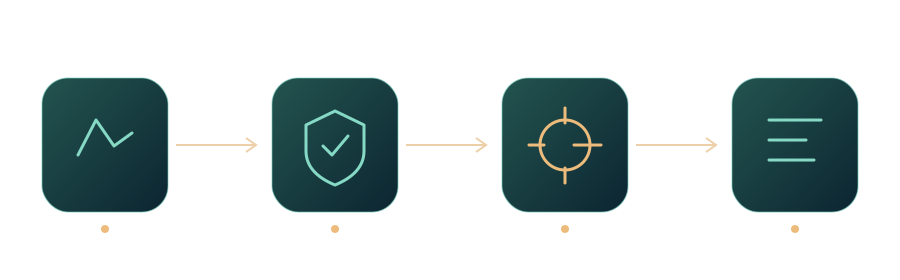
Test misleading evidence
Add near-match passages, retired policies, and a document that mentions the topic but does not answer the question. A strong system should reject irrelevant support or acknowledge the gap. Ask reviewers to open the source rather than grade the presence of a hyperlink. If citation generation is vendor-managed, still verify the complete application behavior, including access control and how translated answers point back to original passages.
Set the operational threshold
Different workflows tolerate different support gaps. A draft brainstorming note and a customer-facing policy instruction should not share one acceptance threshold. Decide which unsupported claims block release and which return the response to an editor. Report sample size and the kinds of failures found. Avoid turning a research benchmark or vendor feature into an unsupported claim that your assistant is fully factual or safe.
A citation-only review
Hide the answer first and ask a reviewer what the cited passages actually establish. Then reveal the response and compare its claims. This reverses the usual persuasive effect, where fluent wording encourages readers to interpret a weak source as supporting more than it says.
Sources and further reading
- Enabling Large Language Models to Generate Text with CitationsEnabling Large Language Models to Generate Text with CitationsALCE authors / arXiv · Research source ·
- Reducing Risks Posed by Synthetic ContentReducing Risks Posed by Synthetic ContentNIST · Research source ·
Editorial approach
AI-assisted original writing, checked against linked public sources. Practical recommendations and illustrative scenarios are editorial analysis, not reported client results. Source dates and product details may differ from this collection’s preparation date.