
Workflows · Guide
Maintenance triage: route routine work without hiding emergencies
Use an explicit escalation path before introducing AI classification to service requests.

Define what automation must not delay
Consider an illustrative property team receiving maintenance messages after hours. AI classification might organize routine work, but an incorrectly downgraded emergency is a different kind of failure from a mislabeled category. Ask the operating team to define warning conditions, an accessible emergency contact route, and what happens when the system cannot determine urgency.
Separate routing from safety advice
Capture location, contact method, issue description, and the time reported. Keep the original message beside the suggested category. Avoid giving AI-generated instructions for dangerous repairs. A rules-based escalation can alert the responsible person while the classification remains provisional. Routing design must fit the property team’s real staffing arrangements rather than an imaginary round-the-clock desk.
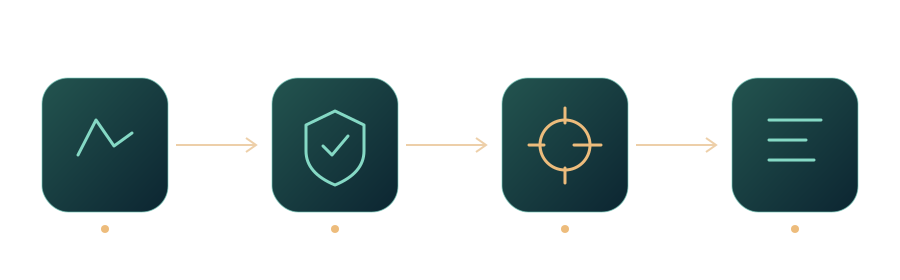
Workflow at a glance
Track ownership, not only status
A request marked in progress should have an owner and next action. If a notification fails, keep the request in an exception queue and provide a fallback channel. Slack’s event architecture illustrates the distinction between receiving an event and carrying out the business action; acknowledgment by a system is not acknowledgment by a responsible employee.
Review the misses
Run a shadow pilot where existing staff make the real routing decisions. Examine disagreements, especially cases the model called routine but staff escalated. Count overdue unowned requests and time to human acknowledgment. This is an operational design proposal, not an emergency-response service or a guarantee that classification can detect every hazard.
A practical next step
Rehearse routine intake, an ambiguous urgent message, and failed notification with the actual duty team. Record the recipient, requester-facing state, and backup route for each. If no person owns a failure state, stop the rollout until the operating gap is resolved. Do not substitute a simulated support desk for real staffing.
Sources and further reading
- The Events APIThe Events APISlack Developer Docs · Documentation ·
- Building effective agentsBuilding effective agentsAnthropic · Documentation ·
Editorial approach
AI-assisted original writing, checked against linked public sources. Practical recommendations and illustrative scenarios are editorial analysis, not reported client results. Source dates and product details may differ from this collection’s preparation date.