
Evaluation · Analysis
Using AI to grade AI still needs a human calibration pass
Treat judge models as triage tools until their decisions match a clear business rubric.

Start with an explicit rubric
A judge asked whether an answer is good may reward confident writing rather than correct policy. Define separate criteria for evidence support, required facts, prohibited actions, clarity, and useful next steps. Bedrock documents evaluation using human reviewers and judge models; choosing the rubric remains a local business decision. Write examples of a pass, a borderline result, and a failure before asking a model to grade large batches.
Calibrate on disagreement
For an illustrative knowledge assistant, let two reviewers independently grade a small mixed set, then compare their reasoning with the judge. Disagreement between humans may reveal an unclear policy rather than model weakness. Keep examples where persuasive language hides a factual error. Avoid using only obvious failures; calibration should include cases that are plausible enough to fool a busy reviewer and expensive enough to matter.
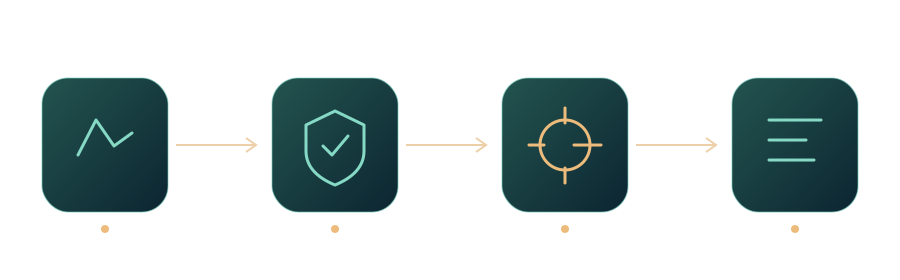
Workflow at a glance
Protect the evaluator’s inputs
Treat the candidate answer and retrieved content as material to assess, not instructions for the judge. An answer could contain language asking to ignore errors or award a high score. Keep the scoring rubric separate and test such adversarial content with synthetic examples. Log judge version and configuration so a score change can be diagnosed. Do not expose unnecessary customer information merely because the task is called evaluation.
Use scores to focus attention
Once calibrated, a judge can help identify candidates for review, but retain periodic human sampling and review every consequential failure category. Report disagreement rate and blind spots rather than a single impressive quality score. If a vendor model changes, recheck calibration. The useful outcome is a faster, more consistent review process, not a circular claim that the assistant is reliable because another assistant approved it.
A blinded calibration sample
Shuffle candidate answers and hide model identities from reviewers when practical. Compare judge explanations with human reasons, not only the final score. If a judge consistently favors one writing style, change the rubric or limit its role rather than assuming the favored system is more accurate.
Sources and further reading
Editorial approach
AI-assisted original writing, checked against linked public sources. Practical recommendations and illustrative scenarios are editorial analysis, not reported client results. Source dates and product details may differ from this collection’s preparation date.