
Strategy · Guide
Expand AI after repeatable results, not after enthusiasm
Use a narrow success to learn what can travel to the next team.

Identify what actually repeated
A successful pilot may depend on one expert reviewer, a clean document set, or unusual developer attention. List those dependencies before expanding. Microsoft’s organizational research discusses changing work at scale; it is not a guarantee that copying one pilot will reproduce its result. Our recommendation is to name the reusable component and the local condition separately so the next team receives a clear proposition.
Change one boundary at a time
Choose whether the next step adds users, document types, integrations, or actions. Adding all four makes new failures difficult to diagnose. In an illustrative service company, extending a reviewed summary to another team is a different decision from allowing it to update customer records. Keep the earlier acceptance cases and add new ones that match the changed boundary, rather than treating the first test set as permanently sufficient.
Workflow at a glance
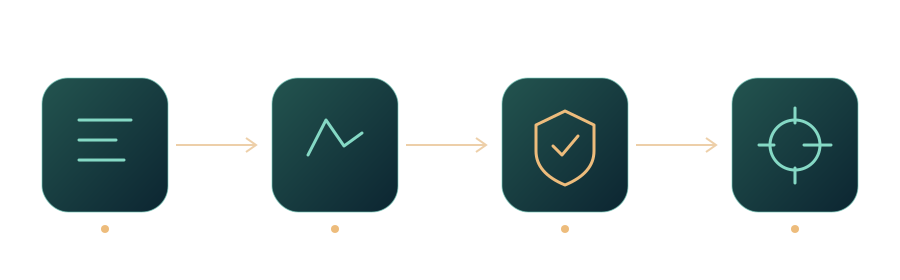
Check the support model
Measure whether incidents and questions grow faster than useful work completed. A manual workaround that was acceptable for three pilot users may become an operating burden for thirty. Assign capacity for access administration, training, and changes. Do not describe scaling as simply increasing a license count. It includes the human work that keeps the process understandable and the data trustworthy as more people rely on it.
Retain a right to narrow again
Expansion should include a review date and a way to reduce scope if performance degrades. Record which assumptions carried over and which were retested. A mature rollout may grow unevenly, with one team proceeding and another waiting. That is more defensible than forcing uniform adoption when workflows differ. The goal is repeatable value, not a visually impressive organization-wide adoption chart.
A next-team transfer note
Prepare a transfer note with the reusable component, required local conditions, changed risks, and new acceptance cases. Ask the next team to confirm each condition rather than inheriting approval by association. Keep the original pilot result available for comparison. This makes expansion a series of accountable decisions and prevents the successful first team from being blamed for failures caused by very different operating circumstances.
Sources and further reading
- 2025: The year the Frontier Firm is born2025: The year the Frontier Firm is bornMicrosoft · Research source ·
- AI RMF Playbook: ManageAI RMF Playbook: ManageNIST · Documentation ·
Editorial approach
AI-assisted original writing, checked against linked public sources. Practical recommendations and illustrative scenarios are editorial analysis, not reported client results. Source dates and product details may differ from this collection’s preparation date.