
Operations · Analysis
Your AI Agent Needs an Expiration Date for Its Memory
A repeat customer asks for the same delivery arrangement as last month. Your AI assistant remembers the request and prepares the order. That sounds helpful—until last month's exception becomes this month's promise. For a small business, the next useful question about AI is often: how do we decide which memories still apply?

Why this matters now
In an October 15 announcement, Microsoft described agent accounts, business process memory and triggers in Copilot Studio, with features rolling out through its Frontier program. The announcement distinguishes current rollout from capabilities planned for later. It does not establish that every business can activate the same features today. [1] Meanwhile, Microsoft's September announcement for the October 27–29 Power Platform Community Conference framed a broader question: how should applications, workflows, agents and people fit together? [2] That is useful context for today's small-business decisions; this article does not report anything from conference sessions. Our editorial view: before giving an agent more work, give its retained context a maintenance plan.
Separate the record from the recollection
Consider a hypothetical independent wholesaler. A customer was allowed to collect an order after closing during a road closure. An assistant might retain “this customer collects after closing.” The underlying record actually supports a narrower statement: an owner approved one exception on a particular date. Store those as different things. The transaction record documents what happened. A working memory can help the assistant find it. The current operating policy determines what may happen next. Remembering an exception should help an agent ask a better question. It should not silently authorize the next exception.
Workflow at a glance
Give each useful memory five fields
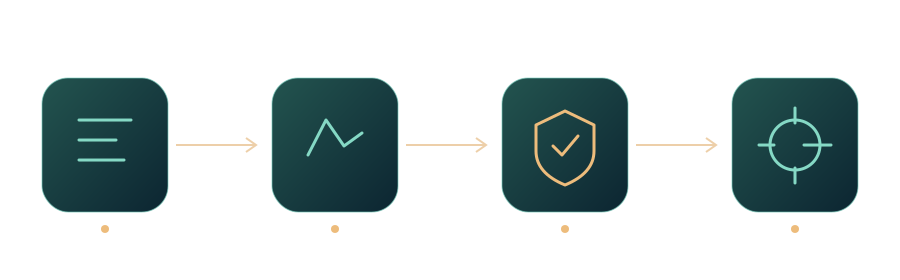
For a first pilot, maintain a small register beside your existing order or customer system: • Statement: exactly what the agent believes it should remember. • Source: the original message, record or explicit instruction. • Scope: the customer, location, task or period it applies to. • Owner: the person responsible for confirming or changing it. • Review date: when the memory must be checked before further use. This register is an original AAHouse workflow recommendation, not a claim about a built-in Microsoft feature. Choose review periods according to your business. A temporary delivery arrangement might expire when the disruption ends; an approved communication preference may deserve a longer review interval. Expiration means “stop relying on this without checking.” It does not mean deleting an order record or changing a required retention policy.
Start with a workflow that drafts before it commits
Return to the wholesaler. When another after-hours collection request arrives, the agent retrieves the prior exception and drafts a response for the owner. It displays the source date, the reason for the exception and the current collection policy. The owner can approve a new exception, decline it or update the policy. Only an explicit policy decision should change the standing rule. A customer email asking for special treatment is evidence of a request, not permission to rewrite operating instructions. This structure also makes handoffs easier. A new employee can understand why the assistant suggested something without needing the previous employee's memory.
Test what happens when memory is wrong
Use fictional orders before connecting the pilot to live commitments. Try four cases: an expired preference, a customer with a similar name, a record that conflicts with current policy, and an email asking the agent to ignore its rules. The expected result is a visible question or an escalation to the responsible person. If the agent silently commits to an exception, improve the workflow before extending its access. Track the time people spend checking suggestions, the number of stale memories caught and any incorrect commitments. Compare those observations with your existing process. These are proposed evaluation measures, not reported savings.
Make forgetting part of the job
A useful first assignment is modest: collect the unresolved context for one recurring process and prepare the next decision. Someone should own the review of what the agent retains. Small businesses do not need an elaborate memory program to begin. They need a practical answer to three questions: where did this belief come from, does it still apply, and who can change it? *Original AAHouse analysis, prepared October 27, 2026. AI-assisted writing and conceptual illustration; Approved for publication. Examples are hypothetical. No product hands-on test or video viewing was performed.
Sources and further reading
- Delegate shared business processes to agents that are more persistent and proactiveDelegate shared business processes to agents that are more persistent and proactiveMicrosoft · News ·
- PPCC 2026: Bringing AI and your business processes togetherPPCC 2026: Bringing AI and your business processes togetherMicrosoft · News ·
Editorial approach
AI-assisted original writing, checked against linked public sources. Practical recommendations and illustrative scenarios are editorial analysis, not reported client results. Source dates and product details may differ from this collection’s preparation date.