
Security · Guide
Rotate an integration secret without creating a silent outage
Credential rotation is an application change with owners, verification, and recovery.

A new value is not a completed rotation
An illustrative document processor reads its API credential only at startup. An administrator changes the stored secret, but workers keep using the old value until a later restart creates mixed behavior. Map every consumer before rotating: web requests, scheduled jobs, local support scripts, and recovery tooling. Define how each refreshes credentials and who checks that the new identity has the same intended scope.
Plan the overlap deliberately
Where the provider permits overlapping credentials, propose a short transition: issue the replacement, validate it in staging, move consumers, confirm live health, then revoke the old credential. Where overlap is unavailable, arrange a maintenance or controlled pause. AWS Secrets Manager documents rotation mechanisms, while OWASP covers secret lifecycle concerns. The appropriate sequence depends on the destination and should be rehearsed rather than assumed.
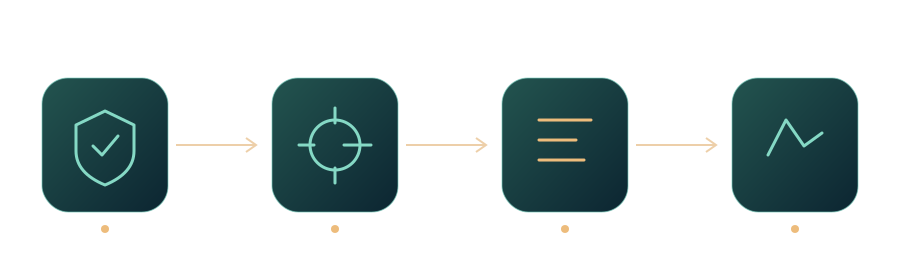
Workflow at a glance
Verify the business path
Use a harmless end-to-end test through the same connector path as normal work. Confirm read and write permissions separately and inspect the owner-visible result. Observe authentication failures by credential version identifier, never by printing the credential itself. If errors increase, pause new work and follow the agreed recovery procedure. Blindly restoring an old secret can be inappropriate when rotation responds to a suspected exposure.
Make ownership survive the project
Record the next review date, customer contact, provider limitations, and which environments hold credentials. A managed-service proposal should state whether routine rotation and emergency revocation are included. Test stale caches and a worker offline during the change. A successful rotation drill reduces operational uncertainty but does not prove that a secret never leaked; incident investigation and ongoing access review remain separate responsibilities.
A rotation calendar with exceptions
Add provider restrictions and blackout periods to the credential calendar. A billing team may not tolerate interruption during close. Rehearse outside that period and identify an emergency contact. Routine scheduling must never delay action on a suspected compromise; that requires a separate incident decision path.
Sources and further reading
- Rotate AWS Secrets Manager secretsRotate AWS Secrets Manager secretsAWS · Documentation ·
- Secrets Management Cheat SheetSecrets Management Cheat SheetOWASP · Documentation ·
Editorial approach
AI-assisted original writing, checked against linked public sources. Practical recommendations and illustrative scenarios are editorial analysis, not reported client results. Source dates and product details may differ from this collection’s preparation date.