
Adoption · Analysis
Measure AI adoption without turning it into surveillance
Collect enough evidence to improve work while respecting employee trust.

Measure the process purpose
Start by asking what decision the data will support. If the question is whether a reporting workflow helps, measure turnaround, review effort, corrections, and completion. A leaderboard of individual prompts may not answer it. Microsoft’s Work Trend Index offers an organizational perspective on changing work; our operational recommendation is to separate curiosity about tool activity from evidence that a particular task became better.
Explain collection before rollout
Tell staff what is recorded, who can see it, how long it is kept, and what it will not be used for. Discuss local requirements with appropriate specialists rather than assuming an internal tool has no privacy implications. In an illustrative small team, aggregated exception counts may be sufficient to improve a form; storing every draft and employee message indefinitely would answer a much broader and harder-to-justify question.
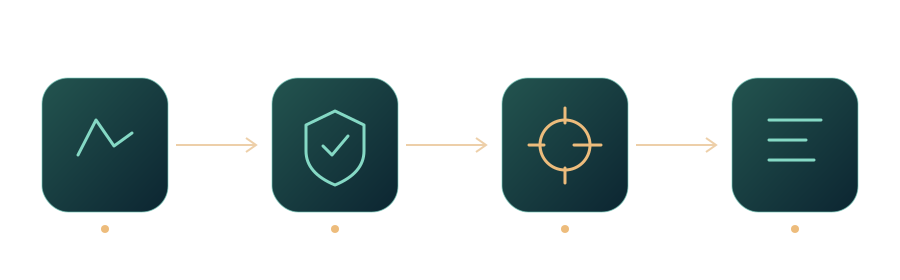
Workflow at a glance
Avoid punishing honest escalation
An employee who rejects a weak AI output may be protecting quality. If performance measures reward acceptance or usage alone, staff can feel pressure to approve poor work. Compare task outcomes with context, and invite explanations for low use. The tool may be unavailable, inappropriate for the role, or adding review burden. Those are useful adoption findings, not evidence of disloyalty or resistance.
Review the metric itself
Ask whether a metric changes behavior in the intended direction. Remove measures that create gaming or discourage reporting mistakes. Use periodic staff interviews alongside aggregate performance, and document changes to the measurement plan. The goal is a reliable improvement process, not a permanent record of every employee interaction. A smaller, transparent dataset can support better decisions than exhaustive monitoring with an unclear purpose.
A measurement transparency note
Write a short note describing the decision supported by each metric, who sees it, and when collection stops. Invite staff to challenge a metric that misrepresents their work. If the business cannot explain why individual-level detail is necessary, reconsider collecting it. The note should be updated when purpose changes, because a reasonable pilot measure can become inappropriate if reused later for an unrelated personnel decision.
Sources and further reading
- 2025: The year the Frontier Firm is born2025: The year the Frontier Firm is bornMicrosoft · Research source ·
- AI RMF CoreAI RMF CoreNIST · Documentation ·
Editorial approach
AI-assisted original writing, checked against linked public sources. Practical recommendations and illustrative scenarios are editorial analysis, not reported client results. Source dates and product details may differ from this collection’s preparation date.